
You have decided the bathroom needs doing, and now you want a number. That is the frustrating part. Ask a few renovators what a bathroom costs and you can get a few different answers, because the price depends almost entirely on choices you have not made yet.
A bathroom renovation cost is set by a handful of decisions: how much of the plumbing moves, how much tiling and waterproofing the room needs, the vanity and cabinetry, and the finish level you pick. The hidden layers under the tiles drive more of the cost than the tapware on top. You can pull the budget back on finishes without regret. The place not to cut is the waterproofing and the trade work behind the walls, because that is the part you cannot fix later without pulling the room apart. A complete quote itemises each of these, which is what lets you compare one quote against another.
If this is your first renovation, here is where the money goes in plain terms, where you can safely spend less, and how to read any quote you are handed.
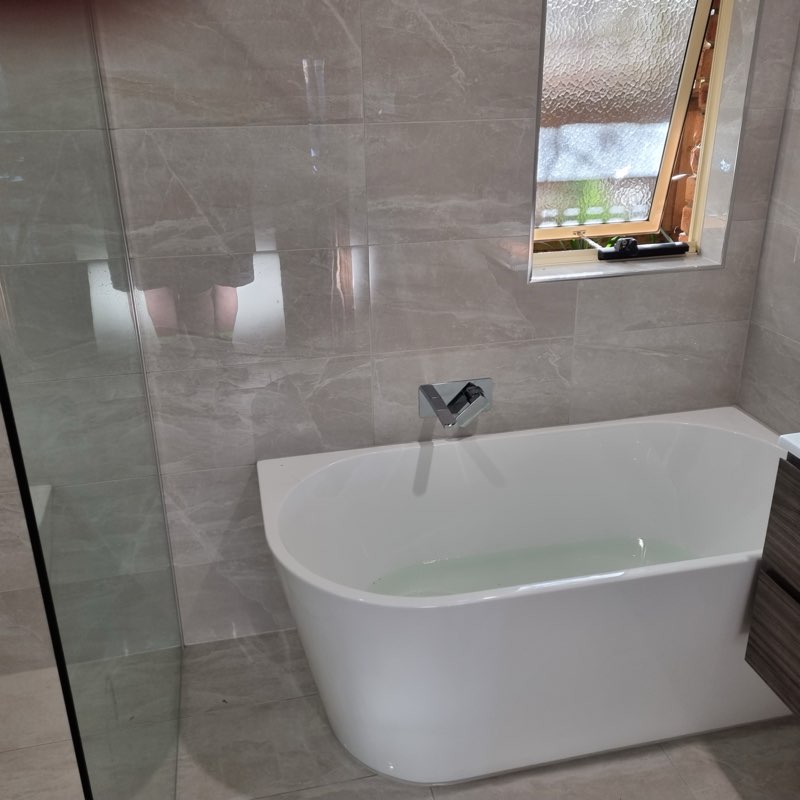
Why is there no single price for a bathroom renovation?
Two bathrooms with the same footprint can land a long way apart. One keeps its layout and gets a tidy update. The other moves the shower, adds a freestanding bath and tiles floor to ceiling. Same room, very different job. So the honest answer to the cost to renovate a bathroom is that it tracks the work you ask for, and the work is set by your plan.
Where does the money go in a bathroom renovation?
Most of a bathroom budget sits in skilled labour and the work you never see again once the tiles are on. Ranked by where the hours and the trade skill concentrate, the main drivers are:
- The trades behind the walls. A licensed plumber lays the pipework before the walls close up (the rough-in), and a registered building practitioner does the waterproofing. This is certified work with an inspection built in, and it is not where a good renovation gets cheap.
- Tiling labour. Often the single biggest labour line. Floor-to-ceiling tiling, feature walls, niches, and very large or very small tiles all add hours. A half-height tile job costs less than a full-height one in the same room.
- Cabinetry and the vanity. A custom vanity built to fit an odd space costs more than a quality off-the-shelf unit that does the same job.
- Moving plumbing. Relocating fixtures adds drainage and floor work. More on this below, because it is the saving most people miss.
- Structural work and access. Removing a wall, working upstairs, or a tight block all add labour before any bathroom work starts.
- Finish level. Tapware, screens, tiles and basins span a huge range. This is the most visible cost and the easiest one to dial up or down.
Where can you save without regretting it later?
The bathrooms that go over budget are rarely the ones with expensive tiles. They are the ones where the plan changed after the walls were already open.
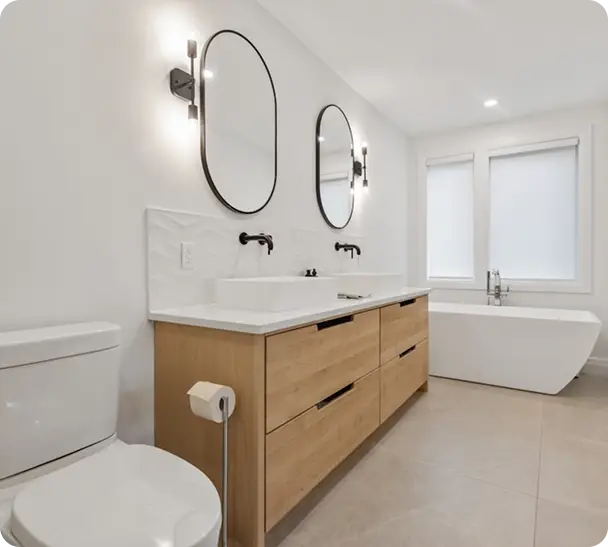
Why does moving plumbing add so much?
Keeping fixtures where they are is one of the biggest savings available. Moving a shower, vanity or toilet means new drainage, a new floor waste (the drain in the floor), and correct falls, which is the slight slope that sends water to that drain. All of it has to be laid and certified by a licensed plumber.
The toilet is usually the most expensive fixture to move, because its waste pipe is the largest and least forgiving. If your layout already works, leaving the fixtures in place is the single cheapest decision you can make. If the layout genuinely does not work, moving them can be worth every dollar. Just go in knowing it is a real cost, not a small tweak.
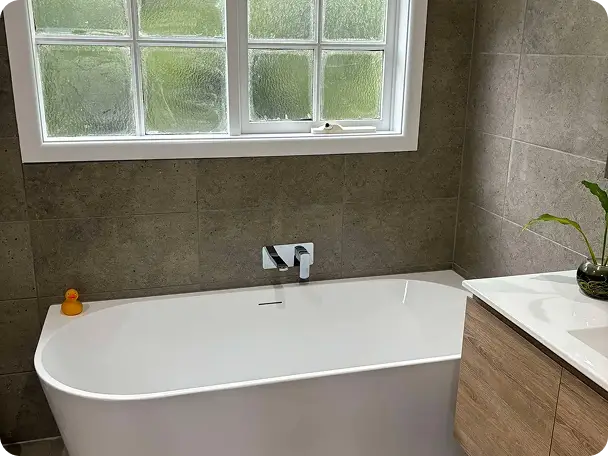
What can push the cost up in older Melbourne homes?
Older homes in the Dandenong Ranges foothills and around south-east Melbourne can carry costs a newer home does not. They are worth allowing for before you are surprised by them.
- Asbestos testing before strip-out. Homes built or renovated before 1990 are likely to contain asbestos in materials like wall sheeting and old vinyl floor backing, according to the Victorian Government (asbestos.vic.gov.au). You cannot tell by looking. Suspect materials should be tested by a NATA-accredited lab, and removed by a licensed removalist if found. Older foothills homes often need this allowance built in.
- Ageing plumbing. Once the walls are open, old pipework that is past its life often has to be replaced while it is accessible. It is cheaper to do it then than to reopen the room later.
- Access. Split levels, stairs and narrow blocks all add time to demolition and to carting materials in and rubbish out.
How do you read a bathroom renovation quote?
This is the part that protects your budget. Read every quote the same way, including ours. A complete quote itemises the work so you can compare like for like:
- Demolition, rubbish removal and making good. The strip-out and the clean-up should be named, not assumed.
- Plumbing rough-in and fit-off. Carried out by a licensed plumber.
- Waterproofing and the pre-tile inspection. To AS 3740, with an independent inspection and compliance certificate before any tile is laid. In Victoria this step is required, so it should appear as a line.
- Tiling, with the tile allowance stated. Watch the allowance here. A prime cost sum (a placeholder amount for items you have not chosen yet, like tiles or tapware) can be set low to make a quote look cheap, until you pick real tiles and the price climbs.
- Cabinetry, electrical and ventilation. Extraction fan, lighting and power all belong in the scope.
- Permits, if the work needs them. Depending on the scope, your renovation may need a building permit, arranged through a building surveyor.
A single round number with no breakdown is the one to question. It often hides a thin tile allowance, or leaves out rubbish removal or the inspection. Ask what the tile and tapware allowances are, and what happens if you go over them.
Get it in writing. For domestic building work worth more than $10,000, Victorian law requires a written major domestic building contract with a registered builder, under the Domestic Building Contracts Act 1995 (Consumer Affairs Victoria). For work over $16,000, the builder must also hold domestic building insurance. A quote is not a contract. The contract is where the scope, the stages and the price are locked down, and it protects you as much as the builder.
What is the one thing that keeps a budget on track?
Lock the layout and the finishes before the first tile is ordered, and the number on the quote is much closer to the number you pay. If you want a real figure for your own bathroom, the honest way to get one is to have someone look at your room and your pipes, then price the actual work.
When you are ready, book an on-site consultation with Bathroom King for a fixed written quote for your bathroom.
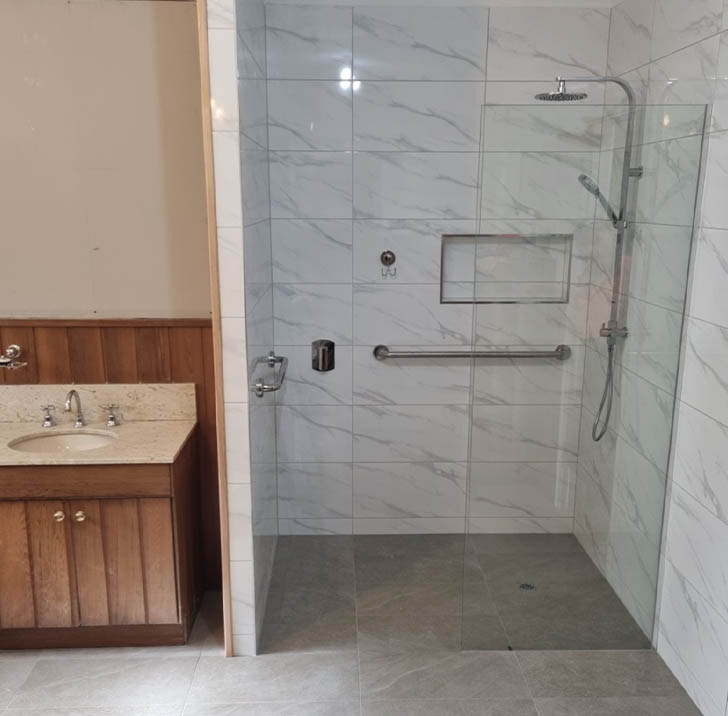
Frequently asked questions about bathroom renovation cost
There is no standard price, because the scope drives the cost. A refresh that keeps the fixtures in place sits at the lower end. A full strip-out with a new layout and premium finishes sits at the top. The reliable way to get your number is an itemised quote after someone has seen the room.
A bit. There is less tiling and less material. But the fixed jobs still apply, including waterproofing, plumbing and the mandatory inspection, so the cost does not fall in step with the size. A small bathroom still carries the same core work.
Yes. Moving the toilet means new drainage and floor work, which is more involved than shifting a vanity or shower. If the toilet can stay where it is, that is a genuine saving.
For work worth more than $10,000, yes. A written major domestic building contract is required under the Domestic Building Contracts Act 1995. It sets out the scope, stages and price, and protects you as much as the builder.
Keep the layout so the plumbing stays put, choose mid-range finishes and a large-format tile, and never save on the waterproofing or the trade work behind the walls. That is where cheap turns into expensive later.


