
There is a short window in a bathroom renovation, after the waterproofing goes down and before the tiles cover it, when you can see the layer that decides whether the room lasts. To check bathroom waterproofing before the tiles go on, look for full coverage across the shower walls and floor, sealed corners and pipe joins, the right height up the walls, and a floor that runs towards the drain. In Victoria the work must be done by a registered waterproofer, and on jobs that need a building permit it must be inspected before it is covered. Once the tiles are on, that layer is hidden for the next fifteen years, so the checks have to happen now.
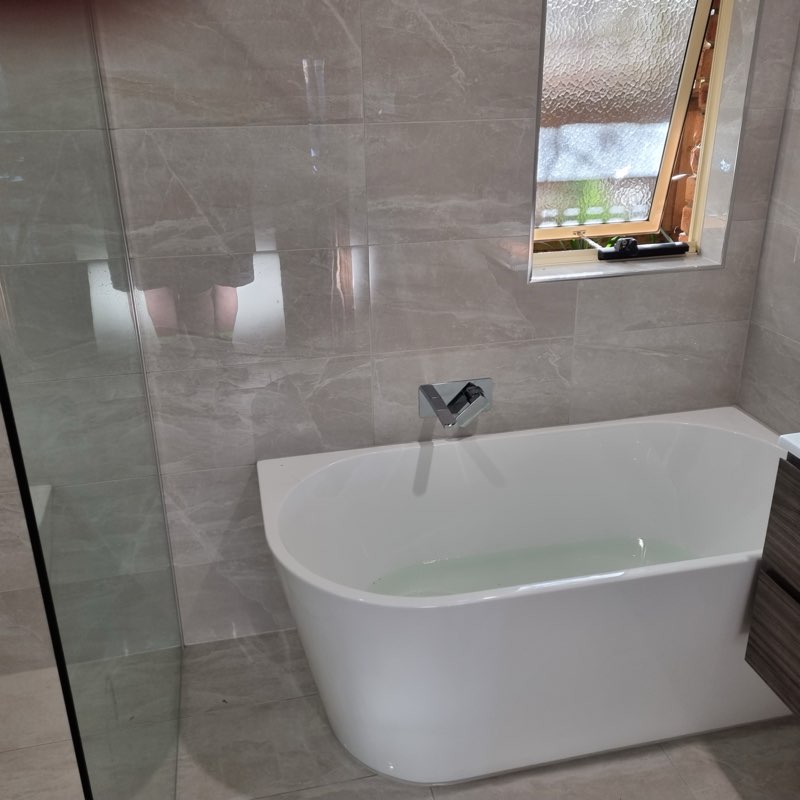
What is bathroom waterproofing, and where does it go?
Bathroom waterproofing is a flexible membrane, rolled or painted on in coats, that stops water passing through the floor and walls of a wet area. It keeps water inside the shower and off the timber, plaster and framing behind the tiles.
The shower is the wettest part of the room, so it gets the most cover. Its walls are waterproofed to a set height and its floor is treated. In many bathrooms the whole floor is done, not just the shower. Outside the shower, the membrane runs a shorter way up the walls at the floor.
The joins do the hardest work. Water finds the weak points: the corners where the wall meets the floor, the seal around the drain, and the spots where pipes come through. Each pipe through the membrane is called a penetration, and every one has to be sealed. Get the flat areas right but miss a corner, and the water still gets out.
What standard does bathroom waterproofing have to meet?
In Australia, wet-area waterproofing is set by an Australian Standard called AS 3740. The current version, AS 3740:2021, is written into the National Construction Code. It covers the materials allowed, how the membrane is designed, and how it is put down.
The standard sets real numbers a homeowner can hold a job against. Shower walls are waterproofed to at least 1800mm above the floor, or just above the shower head, whichever is higher. Where the wall meets the floor outside the shower, the membrane runs up at least 150mm. The floor has to fall towards the drain so water cannot pool. Older shortcuts are ruled out, too: particleboard, for example, can no longer sit under the membrane as a base.
The membrane also needs time to cure before anything covers it, usually a day or two, and should be looked over before tiling starts.
Who is allowed to waterproof a bathroom in Victoria?
In Victoria, wet-area waterproofing must be carried out or supervised by a registered waterproofer. That means a building practitioner registered in the waterproofing category. Only a registered practitioner can sign off that the work meets the standard. A person laying tiles is not automatically the person who should be certifying the membrane.
The registration is handled by Victoria’s building and plumbing regulator, the Building and Plumbing Commission, which took over from the Victorian Building Authority in 2025. Plumbing is a separate trade again. A licensed plumber connects the drain and the tapware under a different licence.
The useful move for a homeowner is simple: ask who is doing the waterproofing, and ask for their registration. On a well-run job it is subcontracted to registered trades, and whoever you hire should be able to say who is doing what.
Is a waterproofing inspection required before tiling?
On bathroom work that needs a building permit, yes. Under Victoria’s Building Regulations 2018, the waterproofing membrane in a wet area is a required inspection stage. The membrane has to be checked before it is covered, and the tiles cannot go on until that inspection is done.
Not every bathroom job needs a permit. A straight swap that keeps the same layout and fixture spots often does not, while moving the plumbing, changing the layout, or building a new wet area usually does. So ask two things before work starts: does my job need a permit, and if it does, is the waterproofing being inspected before the tiles go on.
Even where no permit applies, AS 3740 still governs the work. The membrane has to be done properly, and you can still ask to see it before it is covered.
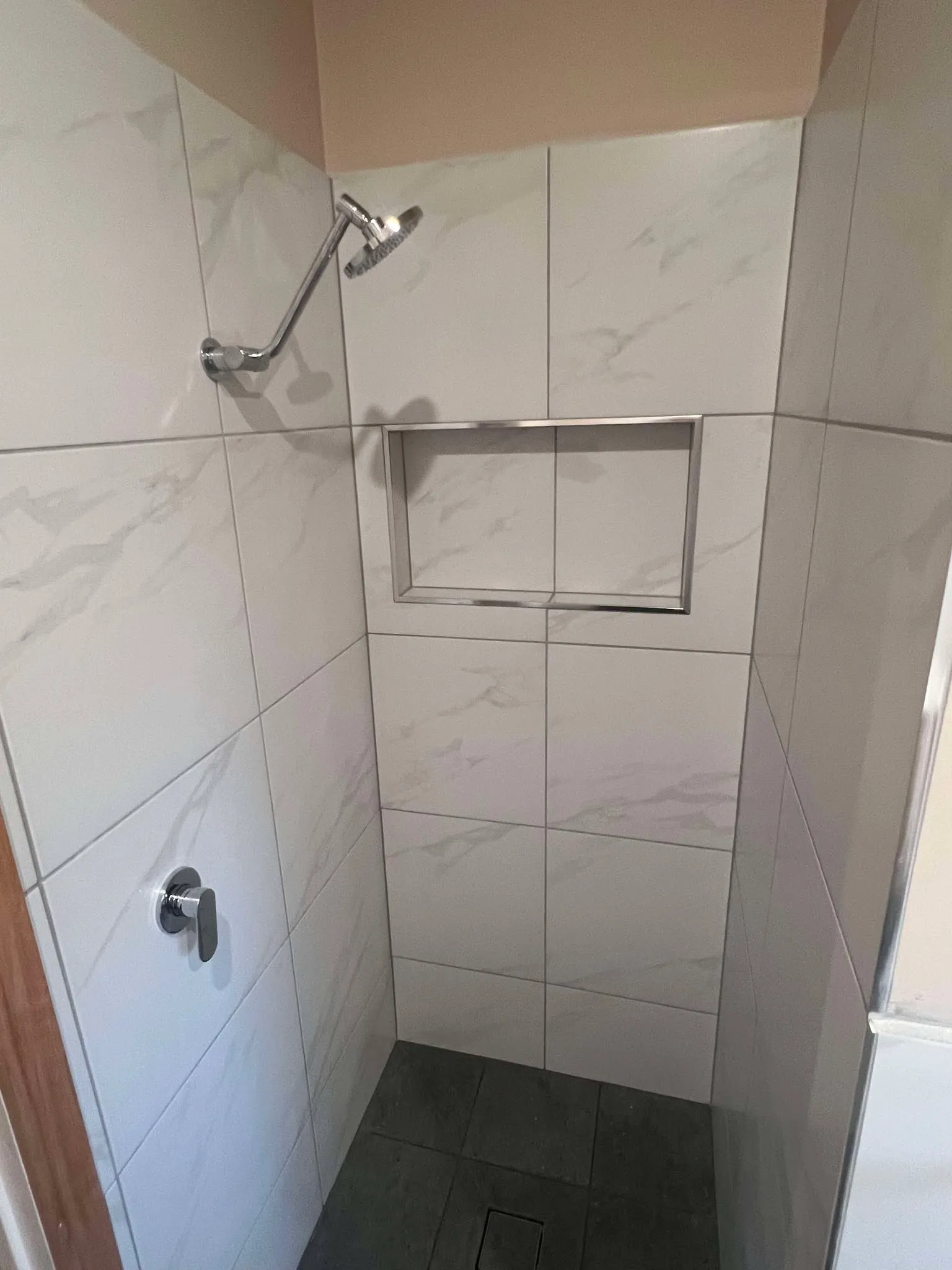
How can I tell if my bathroom waterproofing was done right?
The best time to check is the window after the membrane goes down and before tiling. Here is what to look for, while it is all still visible.
- Full coverage: the membrane should cover the whole shower floor and walls, with no bare patches, thin spots or pinholes.
- Right height: it should run up the shower walls to around 1800mm, and step up over any hob or shower step.
- Sealed corners: the floor-to-wall corners should have reinforcing tape or a bond breaker worked in under the membrane, not a smear of product wiped over the gap.
- Sealed penetrations: around the drain, the tap bodies and the shower outlet, the membrane should be tight and continuous, because these are the first places water tries to get through.
- Floor fall: tip a little water on the floor. It should run to the drain and not sit in a corner.
- Proper cure: the membrane should be given its drying time before anything covers it.
If any of these look off, say so. It is a small fix while the membrane is open, and a large one once the tiles are down.
Why is my bathroom leaking after a renovation?
If your bathroom is already tiled and something feels wrong, a few signs point to waterproofing that has failed or was rushed:
- Hollow-sounding tiles: tiles that sound hollow when you tap them can mean the adhesive under them is breaking down from water.
- Damp or cracked grout: grout that stays wet, cracks or discolours in one patch.
- A musty smell: a damp, mouldy smell in or near the bathroom.
- Bubbling paint: paint peeling or bubbling on the far side of a shower wall, or in the next room.
- Chalky white marks: a chalky white residue creeping up from the base of the tiles.
One sign on its own can be minor. Several together usually mean water is getting past the tiles. Grout and silicone sit on top of the waterproofing and are the first layer to fail. Once they go, the membrane underneath is all that keeps water out of the wall. If it was done well, a re-grout can buy years. If it was rushed, the water is already in the wall.
Melbourne’s weather adds to this. The swing from hot summers to cold, damp winters makes tiles and grout expand and shrink, opening up hairline gaps. In older south-east suburbs and the Dandenong Ranges foothills, a slow leak can sit behind a wall for years before a stain shows.
What should I photograph and ask before the work starts?
Once the membrane is down and before the tiles go on, take photos: the whole shower, the corners, the drain, the pipe joins and the height up the walls. Date them and keep them, with any compliance certificate you are handed.
Those photos are worth more than they look. If a leak shows up in a year or two, they turn a guessing game about what is behind the tiles into a straightforward warranty conversation. They help at sale time too, when a building inspector looks hard at the wet areas.
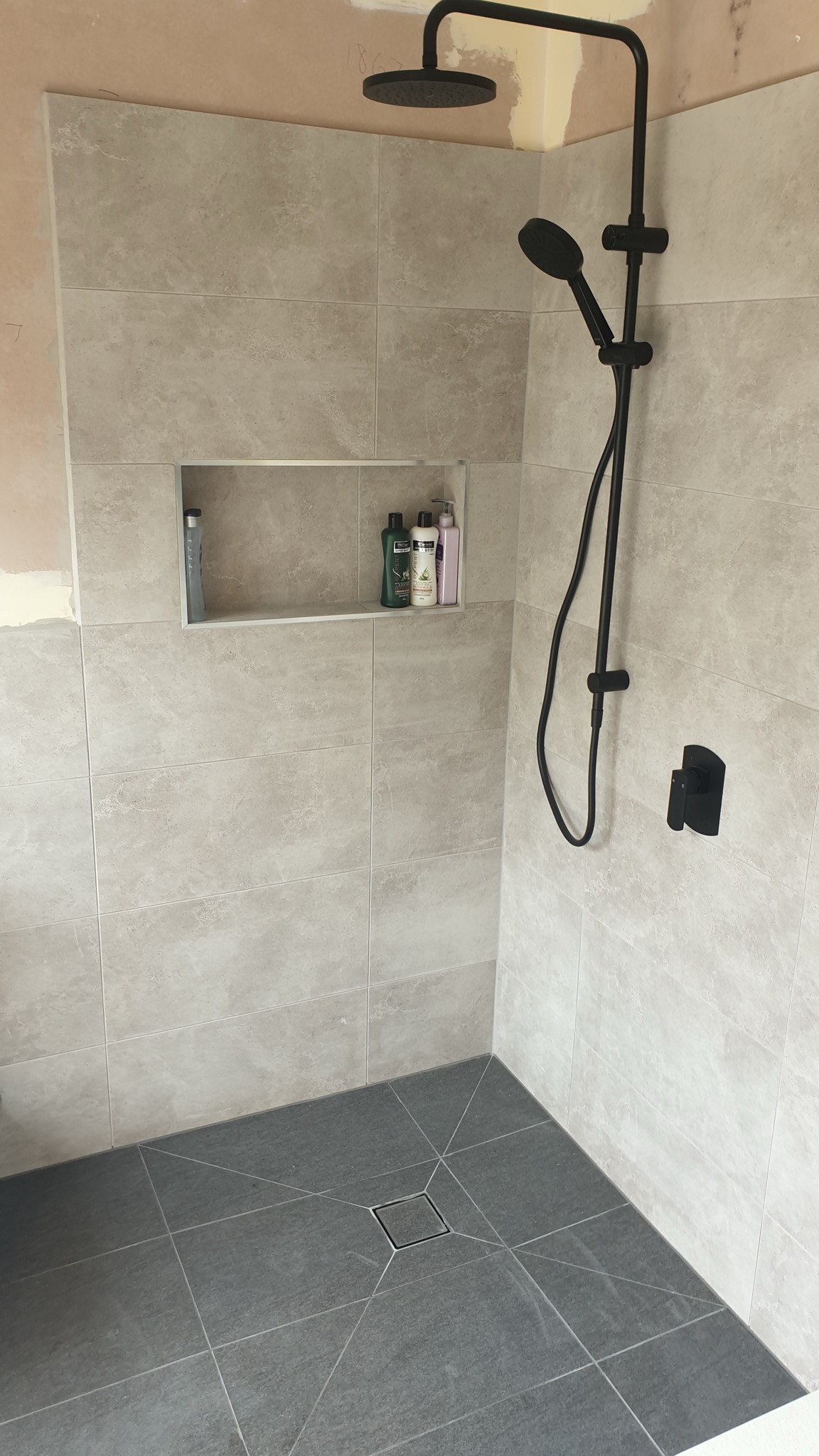
Getting the layer that lasts right
The maths here is lopsided, and that is why the window before tiling is worth using. A waterproofing inspection adds about a day. Pulling up a tiled floor and redoing a wet area a few years later costs many times what the membrane did, and takes the bathroom out of use for weeks all over again. Checking the membrane, or asking to see the photos, is the cheapest insurance in the job. To see how this fits with the rest, read what happens at each stage of a bathroom renovation before you start.
If you are planning a bathroom renovation in south-east Melbourne, ask how the waterproofing will be handled before you sign anything. The team at Bathroom King can walk you through how the membrane, the inspection and the sign-off work on your bathroom. Book an on-site consultation to map it out.


