
Yes. A vanity can be replaced on its own where the layout still works, the waterproofing is sound, and the cabinet is the tired part of a good bathroom. Four things determine how much work is needed. Does the new cabinet cover the same wall and floor area? Can the basin, tap and waste stay where they are? Does the cabinet stand on the floor or hang off the wall? And what has the old one been hiding?
A dated cabinet does not mean the whole room needs rebuilding.
When is replacing the vanity enough on its own?
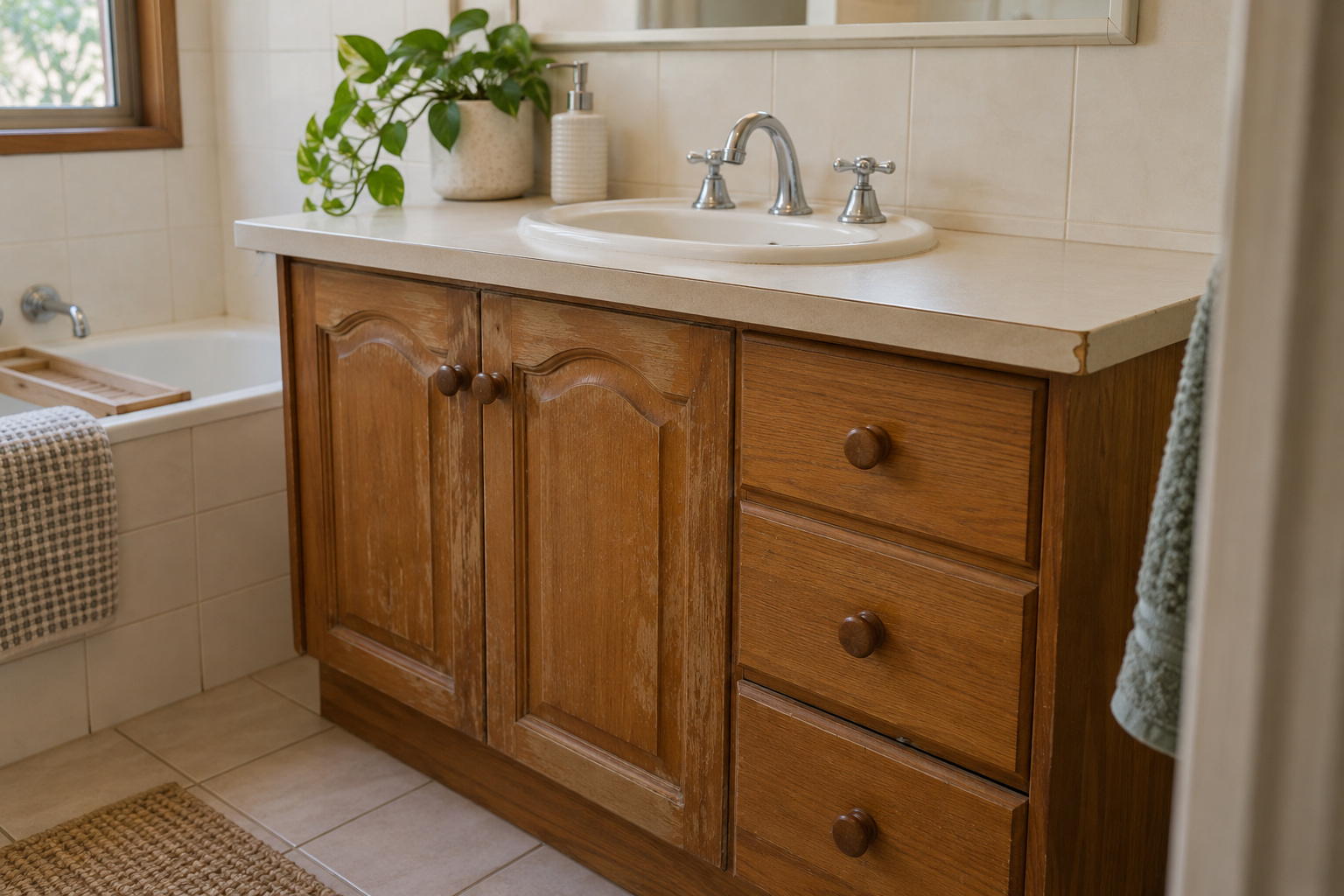
A vanity-only update changes the cabinet, benchtop, basin and tapware. The tiles, shower and layout stay as they are.
It suits a bathroom that still works. Where the layout is wrong or the waterproofing is not sound, changing the cabinet properly means touching the plumbing, wall or floor.
A dated cabinet and a failing one are different problems. Tired doors and a chipped benchtop are a look problem. A swollen cabinet base or soft patch of floor can indicate water damage. Find the cause rather than covering it with a new cabinet.
So the answer is conditional. Nobody can promise the tiles come through untouched until someone has looked behind the old unit.
Will the new vanity cover the same wall and floor?
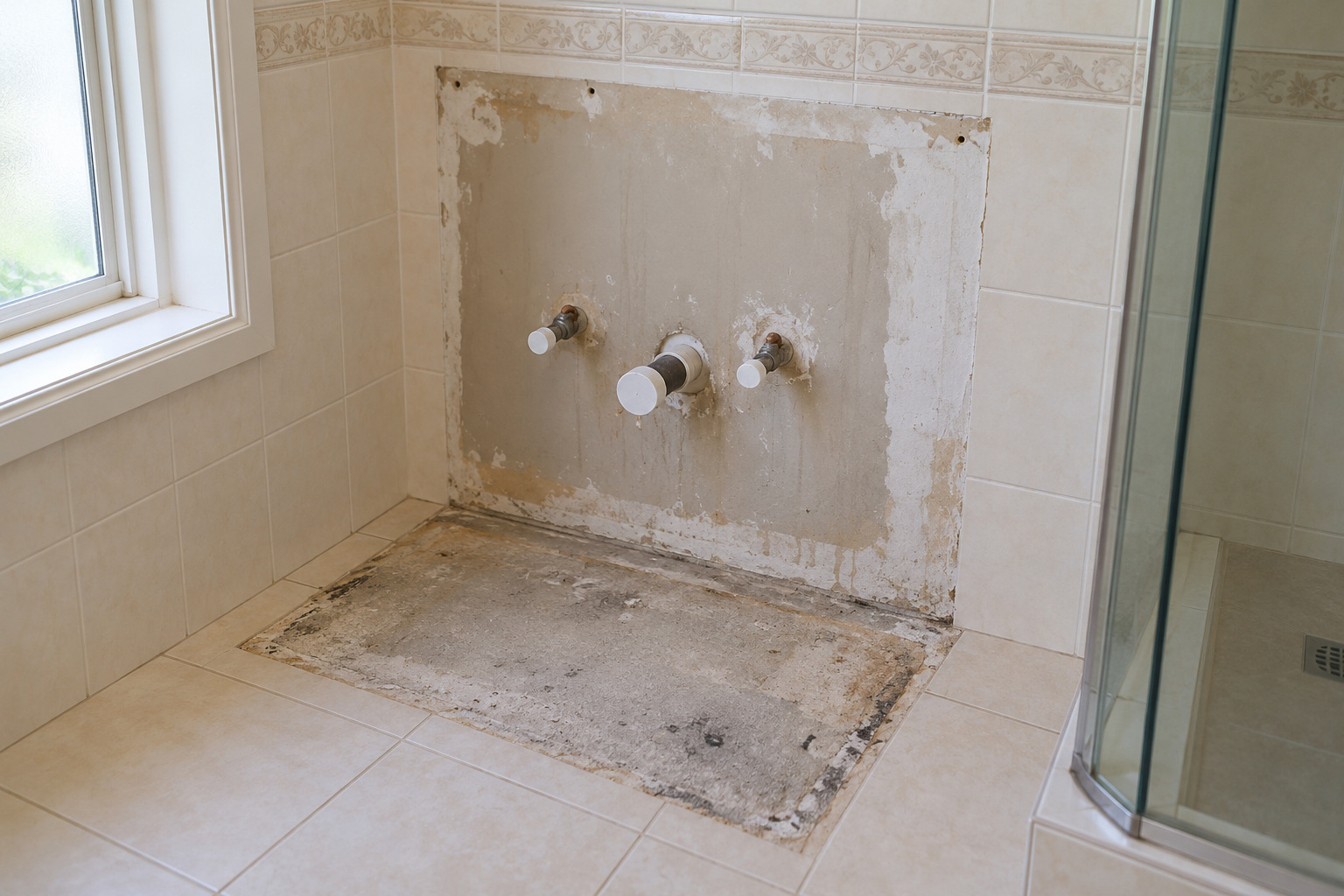
The old cabinet has covered a patch of wall and floor for years. What is under there is unknown until it comes out.
So check this before ordering: will the new vanity cover the same area as the old one? Tiling and floor finishes often stop at the line the cabinet covered.
Take a hypothetical swap. A 900mm floor-standing unit comes out and a 750mm one goes in. A strip of wall and floor is now on show, and whether it is tiled, patched or bare is only known once the old unit is gone. A wall-hung replacement does the same to the floor underneath.
Matching the width of the old cabinet does not prove the new one fits, or that the finishes behind it are sound.
Can the new vanity use the existing plumbing?
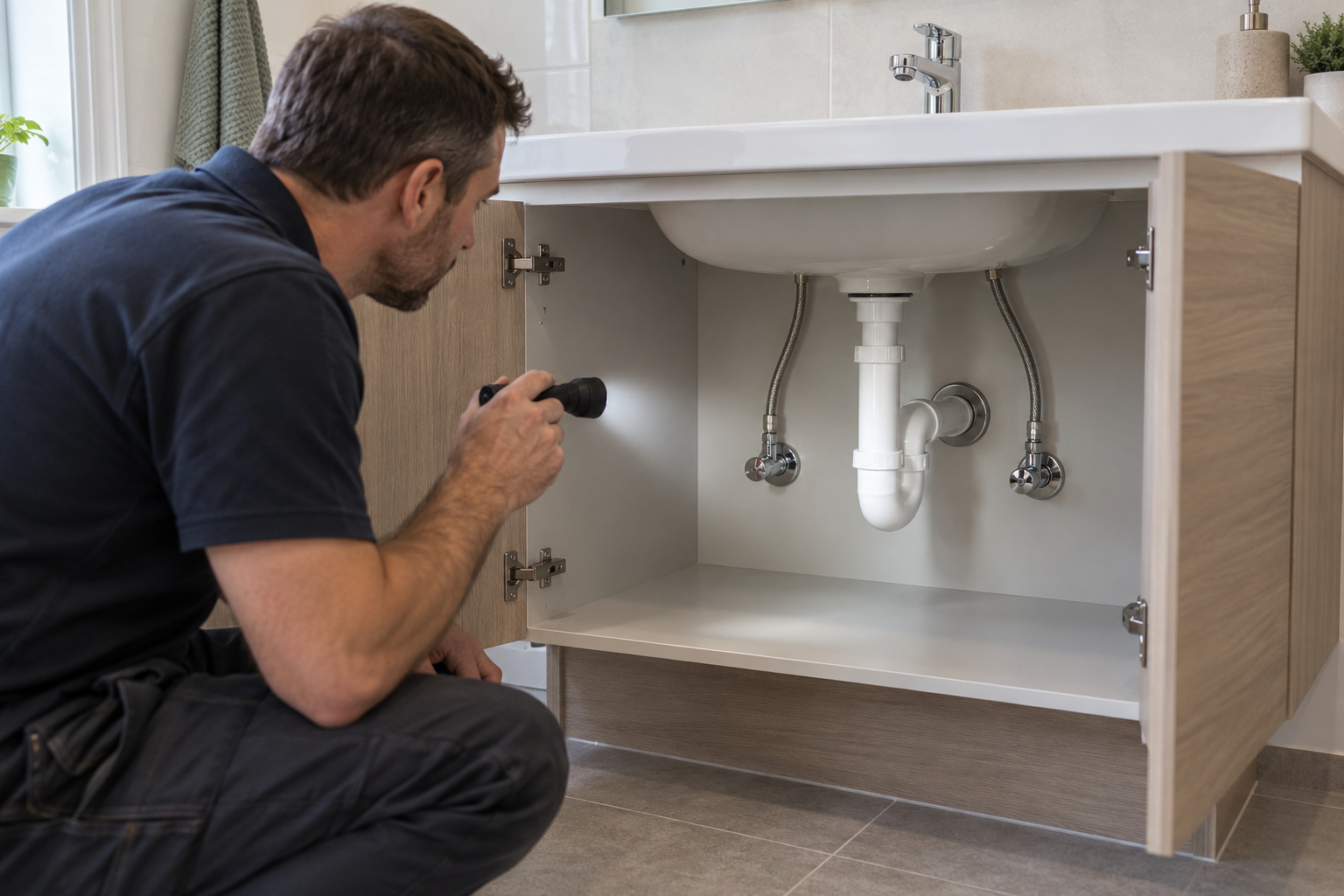
Keeping the pipes where they are is what keeps a vanity replacement small. It does not make every cabinet compatible.
Three things are worth comparing:
- Where the pipes come in. The water and waste entry points must suit the new cabinet.
- What is inside the cabinet. Drawers can clash with pipework that a cupboard left room for.
- The basin and tapware. How the basin sits and where the tap is mounted both change what fits.
Keeping the plumbing roughly where it is generally makes the replacement more straightforward. Moving it, changing the vanity style or altering the basin configuration all make the job more involved.
Hypothetically, a drawer unit replaces a cupboard of the same width. The cupboard had open space at the back for the pipes. Full-depth drawers may occupy that space, so the pipework and drawer layout need to be checked together.
The plumbing itself is not a comparison exercise. Consumer Affairs Victoria says plumbers, gasfitters and drainers are registered or licensed with the Building and Plumbing Commission. The connections are that trade’s work, judged on the pipework rather than from a product page.
Can your wall support a wall-hung vanity?
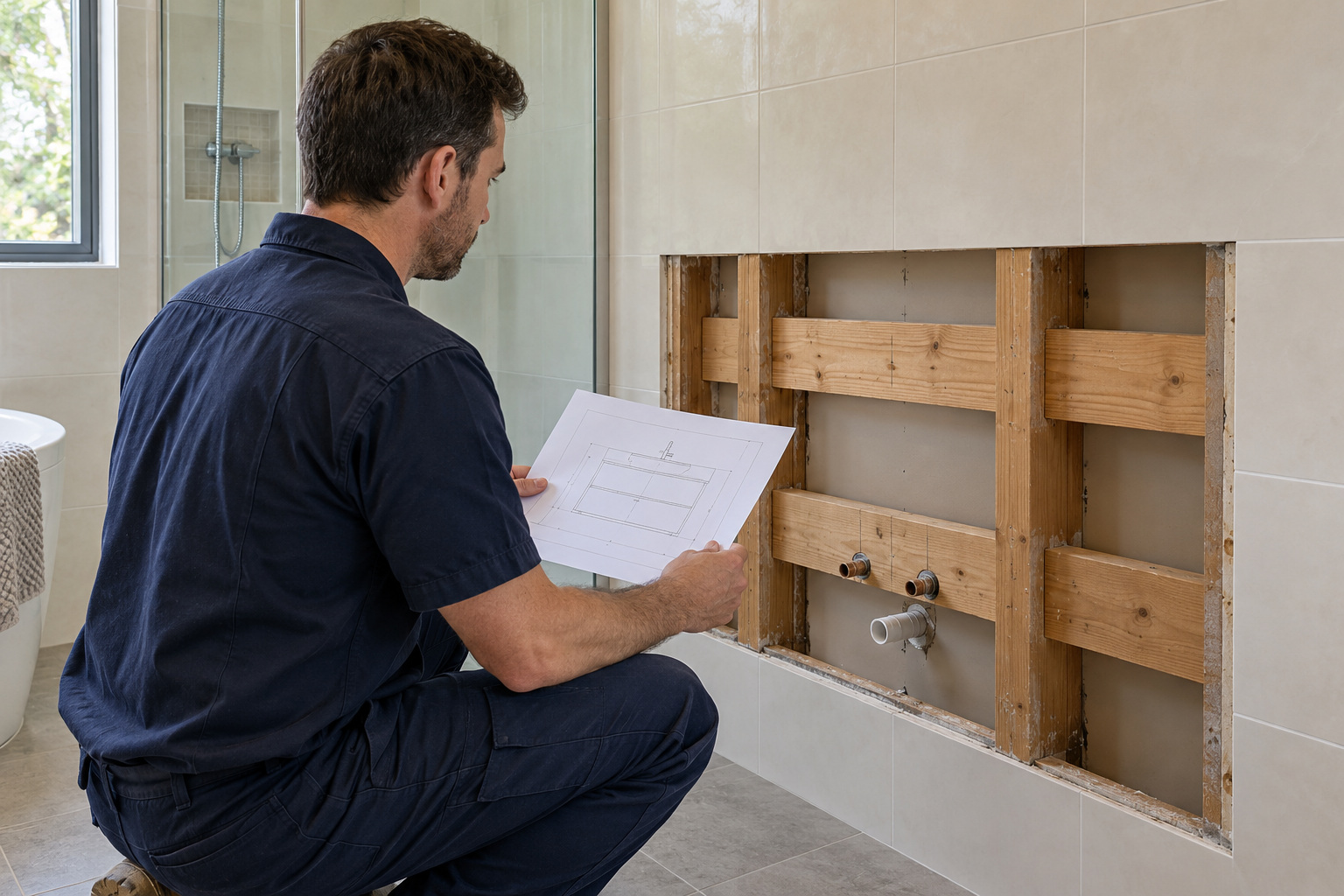
A floor-standing cabinet rests on the floor. The wall supports a wall-hung vanity, so the existing wall and the selected cabinet need to be assessed together.
The installer needs to check what the wall is made of, its condition behind the old cabinet and the new cabinet’s installation requirements. Do not assume every wall is ready, or that every wall needs work.
Custom work suits an awkward corner or an odd width no catalogue size fits. A good off-the-shelf unit is often right in a standard room.
What if the old cabinet is hiding water damage?
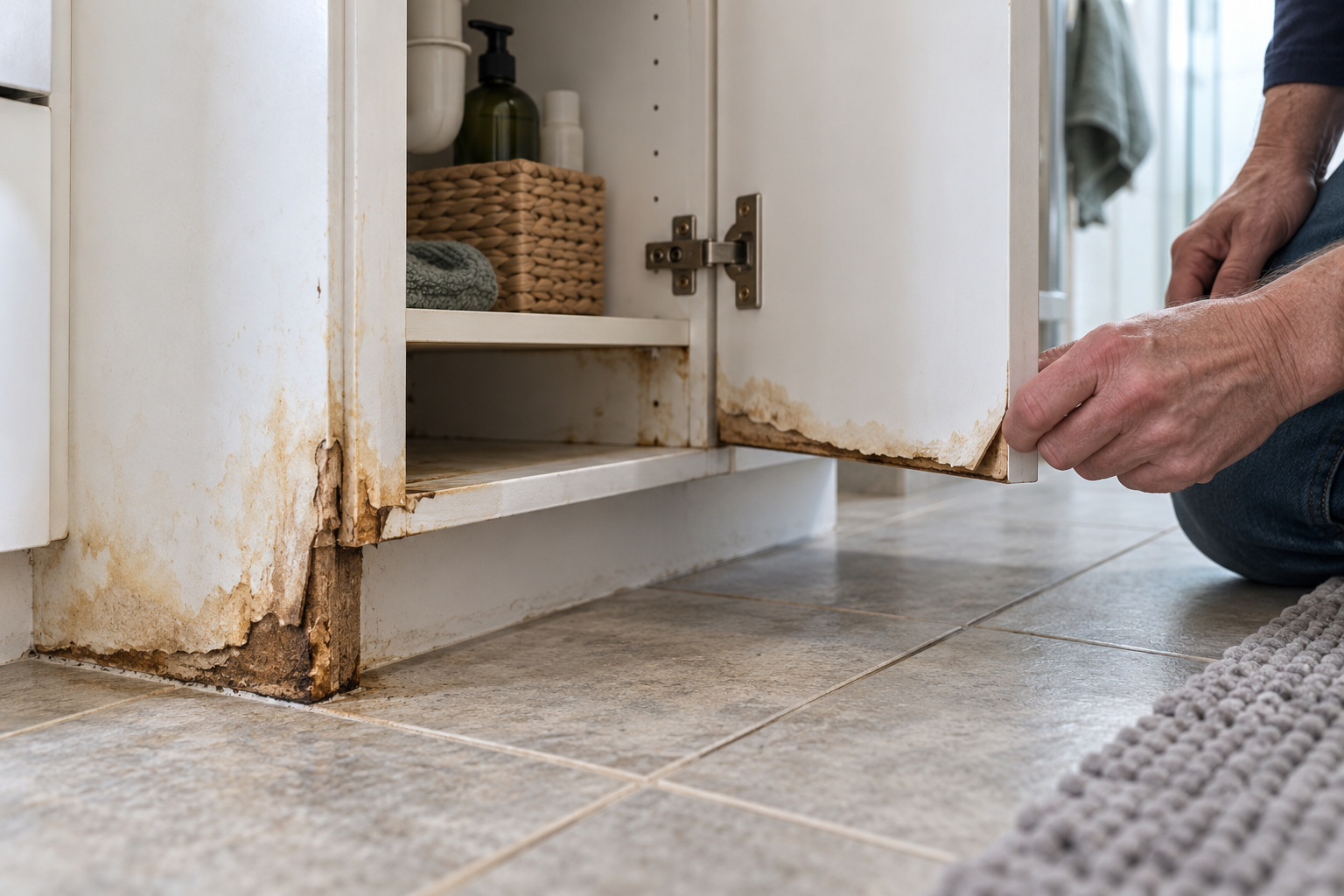
Swelling in the cabinet base, lifting edges on the doors or a dark mark on the floor can be signs of water damage.
They are a reason to find where the water is coming from. They are not proof that the waterproofing has failed, and nobody can diagnose them from a photo. It might be the connections under the basin, or something else entirely.
A new cabinet over a live leak is the wrong remedy: it covers the evidence while the damage carries on. Find the source, fix that, then decide what the cabinet should be. Waterproofing is its own subject, and the published guide to what to check before the tiles go on covers it.
When is it more than a vanity update?
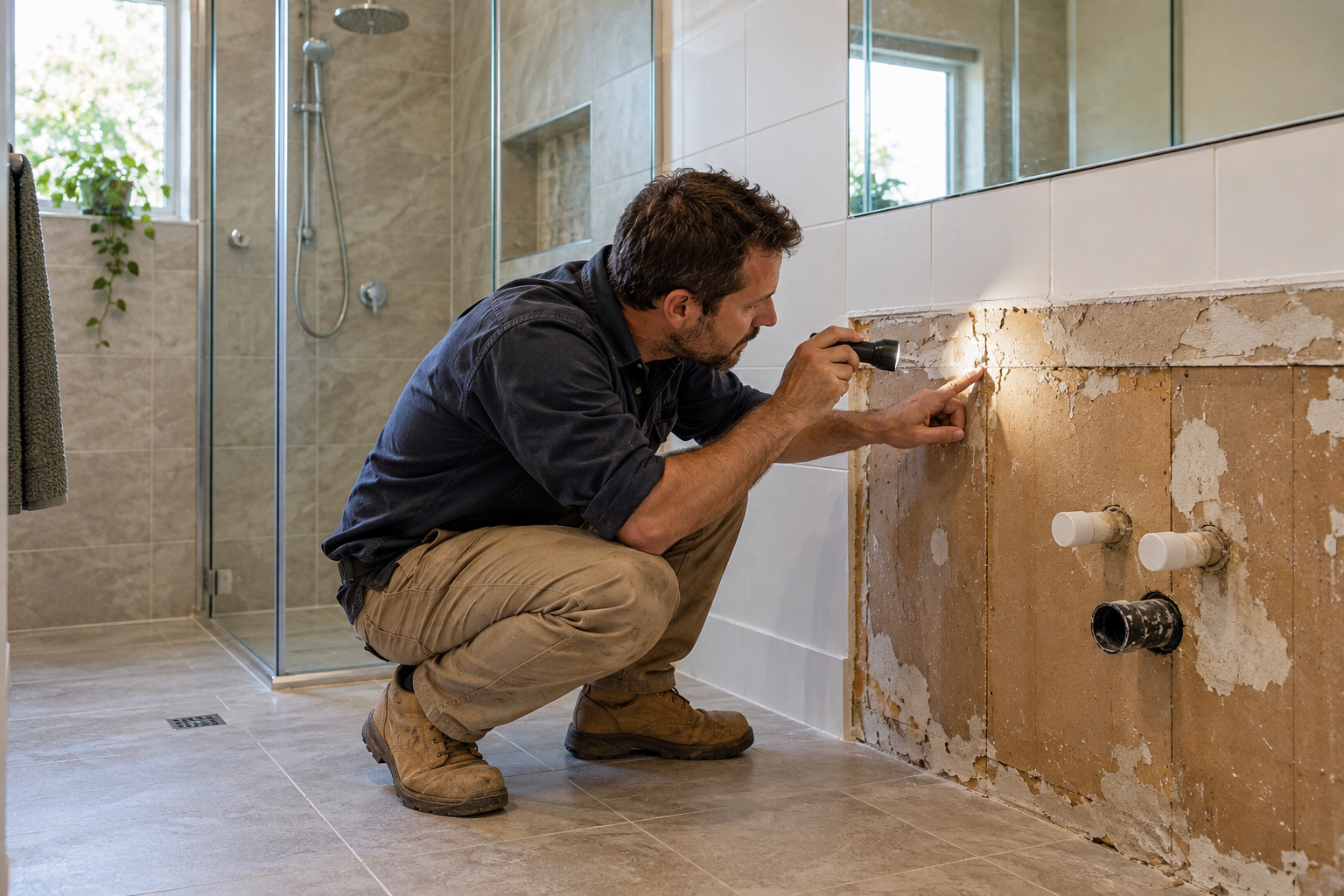
The exposed wall, floor and pipework determine whether repairs or a broader renovation are needed.
Repairs do not automatically mean a full bathroom renovation. The extent of the damage, the surrounding finishes and any layout changes determine how much of the room needs work.
| What is behind the old cabinet | What can stay | Work required |
|---|---|---|
| Same footprint, services line up, finishes sound | Tiles, shower and layout | Vanity-only update |
| Smaller or wall-hung cabinet leaves wall or floor on show | Shower and layout | Vanity update plus finishing work in that patch |
| Swelling, damp marks or a leak behind the cabinet | Decided once the source is found | Repair first, cabinet second |
Choose the replacement before the old unit comes out. Its specifications can then be compared with the existing cabinet and connections before installation day.
Bathroom King renovates bathrooms, laundries and kitchens across Melbourne’s south-east from Ferny Creek. If you want the room looked at before deciding how far the work goes, the vanity and cabinet renovation service is where to start.
Frequently asked questions
Do you need a plumber to replace a bathroom vanity?
The water and waste side of it, yes. Registration for that trade sits with the Building and Plumbing Commission in Victoria, so a basin is disconnected and reconnected by a plumber.
Can a vanity be changed without affecting the waterproofing?
That cannot be promised in advance. Removing the cabinet may expose the surrounding wall and floor, but it does not reveal waterproofing concealed beneath tiles. Swapping the cabinet neither tests nor repairs that layer.


