
You are looking at a tired bathroom, and through the wall the laundry is just as worn. Cracked tiles, dated taps, the lot. Now you are weighing up whether to fix them one at a time or do both in one go.
For most south-east Melbourne homes, combining the two is the smarter move when the rooms share a wall. Laundry renovations often sit right next to a bathroom upgrade, and there is good reason to think about them together. But it is not the right call for everyone.
That is the decision this guide works through. For a south-east Melbourne homeowner with a bathroom and laundry on the same wall, the choice between doing them together or one at a time shapes the budget, the timeline and how long the rooms are out of action. Here is an honest look at when to combine them and when to keep them apart.
For most south-east Melbourne homes, combining the two is the smarter move when the rooms share a wall. Laundry renovations often sit right next to a bathroom upgrade, and there is good reason to think about them together. But it is not the right call for everyone.
That is the decision this guide works through. For a south-east Melbourne homeowner with a bathroom and laundry on the same wall, the choice between doing them together or one at a time shapes the budget, the timeline and how long the rooms are out of action. Here is an honest look at when to combine them and when to keep them apart.
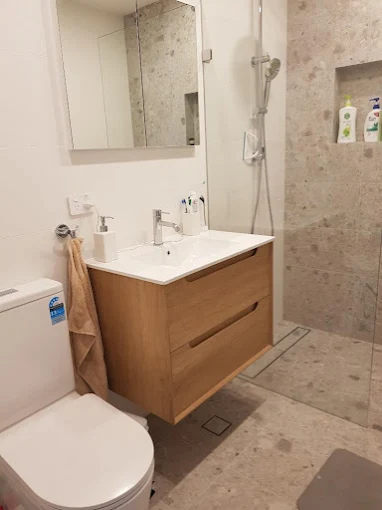
Should I renovate my bathroom and laundry at the same time?
Most homeowners in the south-east are better off doing both rooms together, and the reason is structural. In brick veneer homes built from the 1970s through the 2000s, the bathroom and laundry are usually plumbed off the same wet wall. They share the water supply, the drainage, and often a back-to-back layout. That shared wall is also why combining the two is such a common renovation choice in these homes. When both rooms feed off the same plumbing, it rarely makes sense to disturb it twice.
When the rooms share that wall, combining the work pays off in a few ways:
When the rooms share that wall, combining the work pays off in a few ways:
There are situations where this logic does not hold, and we cover those below. But if your bathroom and laundry sit back-to-back and both need work, doing them together usually means less disruption and a tidier result.
What does a combined bathroom and laundry renovation involve?
When both rooms share a wet wall, the work runs as one sequence rather than two. The same shared-wet-wall plan shows up in almost every south-east Melbourne brick veneer from the 1970s onwards, and it shapes how the trades stack.
Here is roughly how a combined job flows:
Here is roughly how a combined job flows:
Demolition:
Both rooms are stripped out together, back to the frame and floor.
Plumbing rough-in:
A licensed plumber sets the pipework for both rooms off the shared wall.
Waterproofing:
A registered waterproofer treats both wet areas. Bathroom and laundry waterproofing are both covered by AS 3740, the Australian Standard for waterproofing wet areas, so the same trade handles both in one stage.
Tiling:
Floors and walls are tiled across both rooms.
Fit-off:
Vanities, tapware, the laundry trough, cabinetry and fixtures go in, and both rooms are finished.
The work does not double just because there are two rooms. The trades mobilise once, the waterproofing happens in one stage, and the schedule runs as a single project. We cover the typical bathroom renovation timeline in more detail in a separate article, and a combined job extends that timeline rather than repeating it.
Can I turn my laundry into a mudroom or second-toilet while I'm at it?
A renovation is a good time to rethink what the laundry does for you. If you are opening the room up anyway, it is worth asking whether it could work harder.
A few common upgrades people consider:
A few common upgrades people consider:
These add-ons are worth it when the room has the floor space and the layout to support them. They are a step too far when the laundry is small, or when adding a toilet means moving drainage a long way from the existing wet wall. A second toilet in particular brings extra plumbing and structural work, so it adds time and needs planning early.
The honest test is whether the space can take the extra function without feeling cramped. If it can, doing it during the renovation is far easier than retrofitting later.
The honest test is whether the space can take the extra function without feeling cramped. If it can, doing it during the renovation is far easier than retrofitting later.
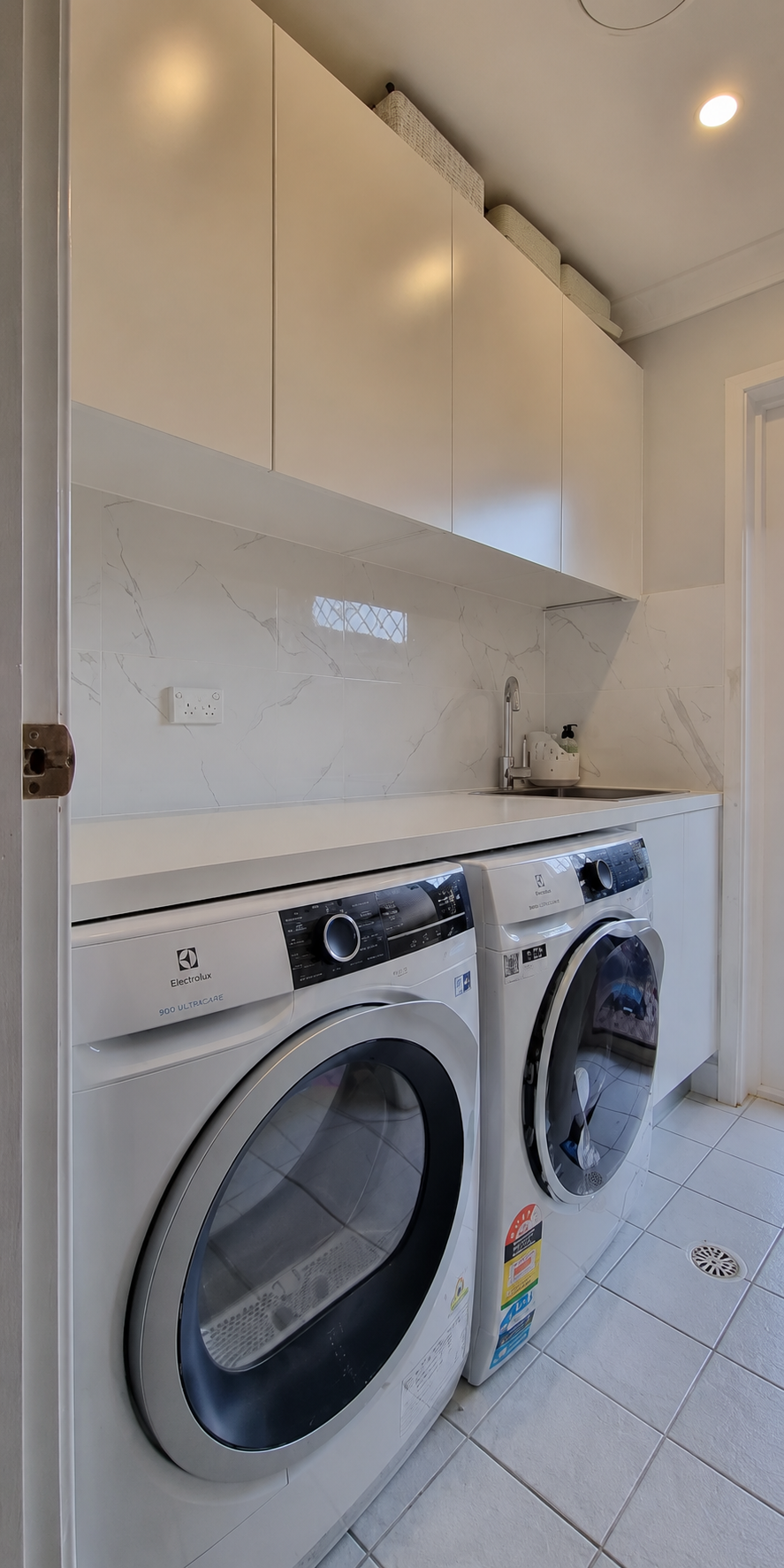
How does the timeline change when you do both?
Adding the laundry to a bathroom renovation extends the timeline, but not by as much as you might expect. A combined job may run about one to two weeks longer than a bathroom on its own. It does not double.
The reason why comes back to the shared work. There is more tiling area, more demolition and more fit-off across two rooms. But the trades only mobilise once, and the same waterproofing stage covers both rooms. The extra time comes from the added work within each stage, rather than a whole second renovation.
That changes if the laundry needs structural work. Knocking out a wall, expanding the footprint or adding a second toilet pushes the timeline further, because there is more plumbing, framing and waterproofing involved. If you are planning that kind of change, it is worth raising it early so the schedule reflects it from the start.
For a straightforward combined job where both rooms sit on the same wet wall, though, the extra week or two is a small price for getting both rooms done in one disruption rather than two.
The best time to decide is before the quote, not during the job. If you think you might do both rooms, say so at the first visit, even if you are not certain. It costs nothing to have both rooms measured and scoped together, and it gives you a real basis to compare doing them at once against staging them. Deciding later, once the bathroom is already underway, usually means a separate visit and a fresh round of planning for the laundry.
If you are working through whether to do both rooms together or one at a time, we would be glad to walk through your specific scope on a quote visit. Get in touch via the contact form or give us a call.
The reason why comes back to the shared work. There is more tiling area, more demolition and more fit-off across two rooms. But the trades only mobilise once, and the same waterproofing stage covers both rooms. The extra time comes from the added work within each stage, rather than a whole second renovation.
That changes if the laundry needs structural work. Knocking out a wall, expanding the footprint or adding a second toilet pushes the timeline further, because there is more plumbing, framing and waterproofing involved. If you are planning that kind of change, it is worth raising it early so the schedule reflects it from the start.
For a straightforward combined job where both rooms sit on the same wet wall, though, the extra week or two is a small price for getting both rooms done in one disruption rather than two.
The best time to decide is before the quote, not during the job. If you think you might do both rooms, say so at the first visit, even if you are not certain. It costs nothing to have both rooms measured and scoped together, and it gives you a real basis to compare doing them at once against staging them. Deciding later, once the bathroom is already underway, usually means a separate visit and a fresh round of planning for the laundry.
If you are working through whether to do both rooms together or one at a time, we would be glad to walk through your specific scope on a quote visit. Get in touch via the contact form or give us a call.
Frequently asked questions about renovating a bathroom
It can make the job more efficient, especially when both rooms share a wet wall. The saving is usually in reduced setup, shared trade visits and one project schedule, not in the fixtures or materials themselves.
It usually makes sense when the bathroom and laundry sit back-to-back or share the same plumbing wall. In that situation, the plumber, waterproofer and tiler can often work across both rooms in one sequence.
Staging the work can be better if cash flow is tight, the bathroom is your only bathroom, one room is urgent and the other is not, or the two rooms are structurally separate.
Tiling, in most cases. A standard bathroom of around 5 to 8 square metres takes 5 to 8 days to tile, longer with large format tiles, mosaics, or complex patterns. Waterproofing is shorter as an active stage but adds 24 to 48 hours of cure time on top before tiling can start.
Yes, if the laundry has enough space and the plumbing layout supports it. A second toilet needs to be planned early because it can add drainage, framing and waterproofing work. Other options people consider is turning the laundry into a combined laundry and mudroom. Whatever you do, waterproofing is required in both areas and careful planning. Talk to the professionals.


