
Walk into a bathroom that was redone around 2010 and you can usually date it in a second. The mosaic feature strip, the glossy white tiles, the dark grout gone grey at the edges: it all says "ten years ago" before you have worked out why.
Choosing bathroom tiles that don't date comes down to four decisions: the scale of the tile, the finish, the grout, and how much feature detail you use. Get those right and the tiles will outlast most of what sits in the room. Get them wrong and the bathroom can look tired within a decade, well before the renovation is paid off.
If you are redoing a bathroom in an older south-east Melbourne home, the tiles are the thing you will look at every day for the next fifteen to twenty years. Here is how to choose them so they still look right in year twelve.
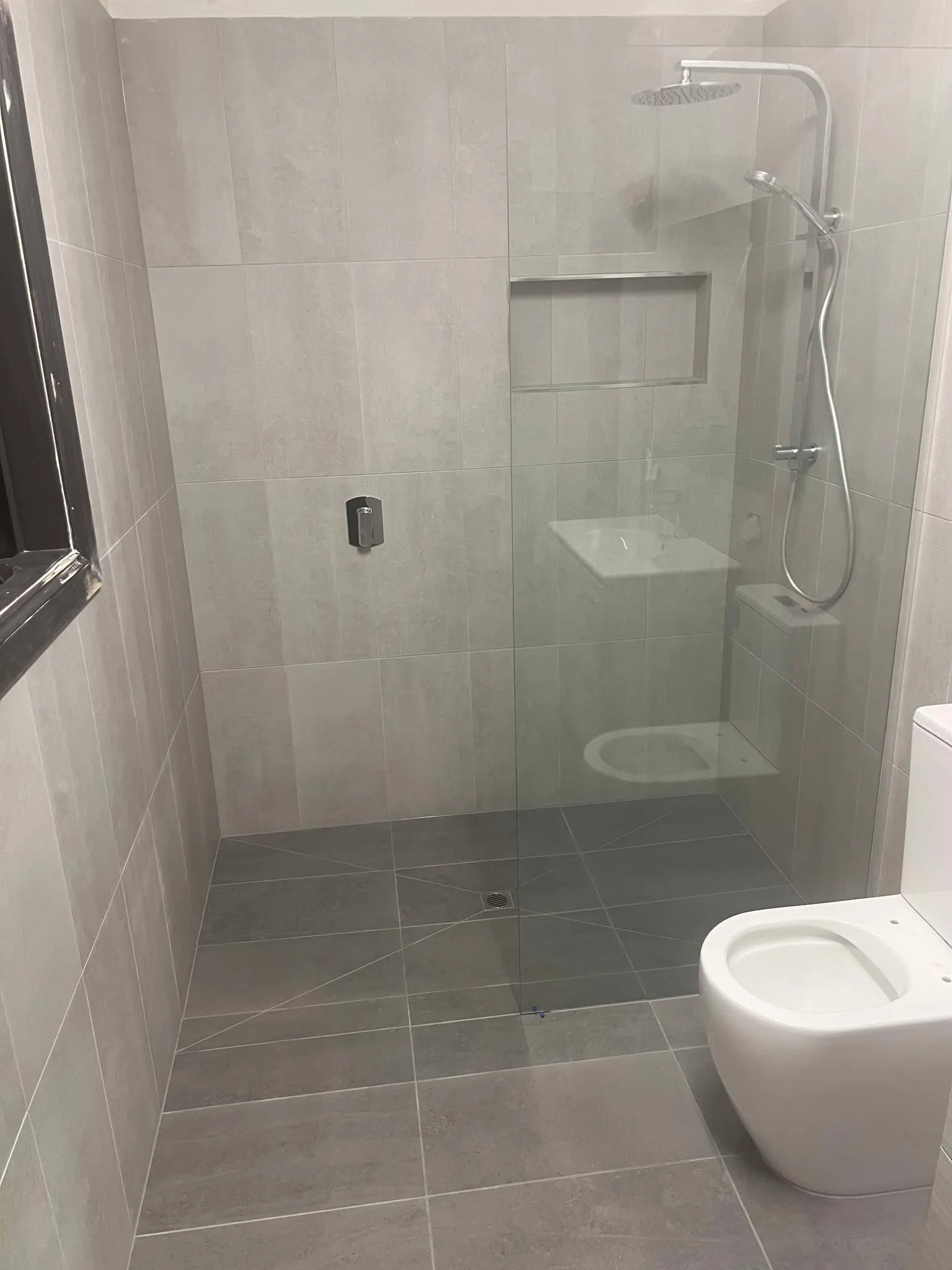
What makes a tile choice age well?
Should you use the same tiles on the floor and walls?
Running the same tile across the floor and walls gives a calm, continuous look. Splitting them lets each surface do its own job. Both work, and the right call depends on the room.
- The same tile everywhere. Often large-format on the floor and walls, with fewer grout lines and a room that reads bigger. It suits small bathrooms with limited sightlines. One check: the tile has to be rated for floor use, not just walls, so confirm its slip rating before you commit to it underfoot.
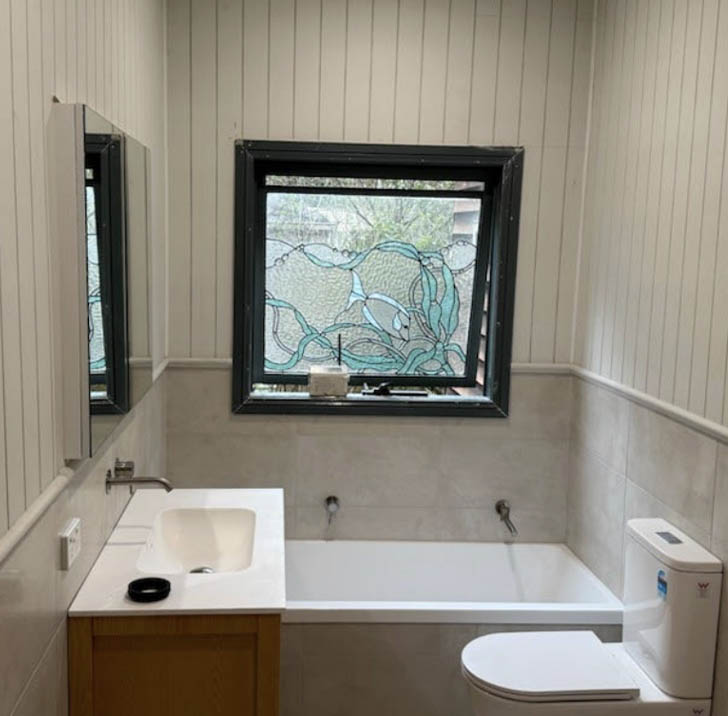
- A different floor tile. A floor tile that does the grip work, with wall tiles chosen to catch the light. This gives more visual interest, at the cost of more grout lines to keep clean.
In a small bathroom, continuous tiling reads as more space. Broken-up tiling reads busier. If the room is tight and you want it to feel larger, fewer changes of tile is usually the safer move.
What size tiles work best in a small bathroom?
What slip rating do bathroom tiles need?
AS 4586 is the Australian standard that measures how slip-resistant a new tile is. It is the number to check before you fall for a finish. Two ratings come up, and they are not the same thing.
- The P rating (P0 to P5). This comes from a wet pendulum test and is the rating Australian specifiers and councils actually use. Higher is grippier.
- The R rating (R9 to R13). This comes from an oil-wet ramp test and is the one you often see printed on imported European tile boxes. Because it uses oil rather than water, it is a rougher guide for a wet, barefoot bathroom, so treat it as indicative.
As a practical starting point, aim for at least P3 (roughly R10) on a bathroom floor, and go higher on the shower floor, around P4 (roughly R11), because it is wet and you are barefoot. A matt finish does not guarantee grip. Some matt tiles rate poorly and some polished ones do better than you would expect, so ask for the rating and don't judge by feel alone.
How does grout colour age a tile installation?
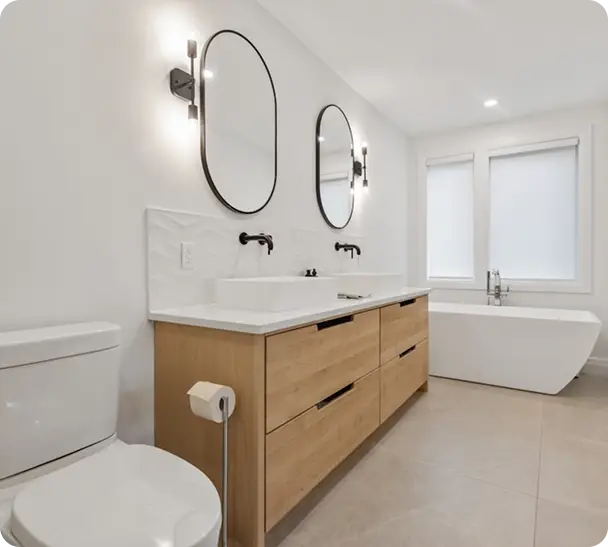
Our advice is to choose the grout colour at the same time as the tile, not after it. Matching is harder than people expect, and it is a decision worth settling before the tiles arrive. The width and colour of a grout line is what makes a tile job look intentional rather than rushed.
What tile trends should you be careful about?
Some tile looks survive and some date on a fairly predictable cycle. Strip out enough 2000s bathrooms and a pattern shows up: the same handful of choices keep dating, over and over, on a roughly ten-year loop.
- Feature mosaic strips. The horizontal band running through the shower tends to date within about five years.
- Very high-contrast schemes. White tile, black grout and black frames all at once. This dates fast.
- Hexagon feature floors. Already dating from the 2018 to 2020 wave.
- Herringbone. Still holding up, as long as the proportions and the grout are right.
- Subway tile. Survives, but the glossy-white-with-dark-grout version from the 2010s is on its way out.
- Wood-look porcelain. Mixed. The good ones read like real timber; cheap prints repeat obviously and look fake up close.
The thread running through all of it is restraint. The looks that date are usually the ones trying hardest to be current. A calm choice you barely notice is the one you will still be happy with in ten years.
How does tile choice affect the renovation timeline?
Getting the tile and the workmanship right together
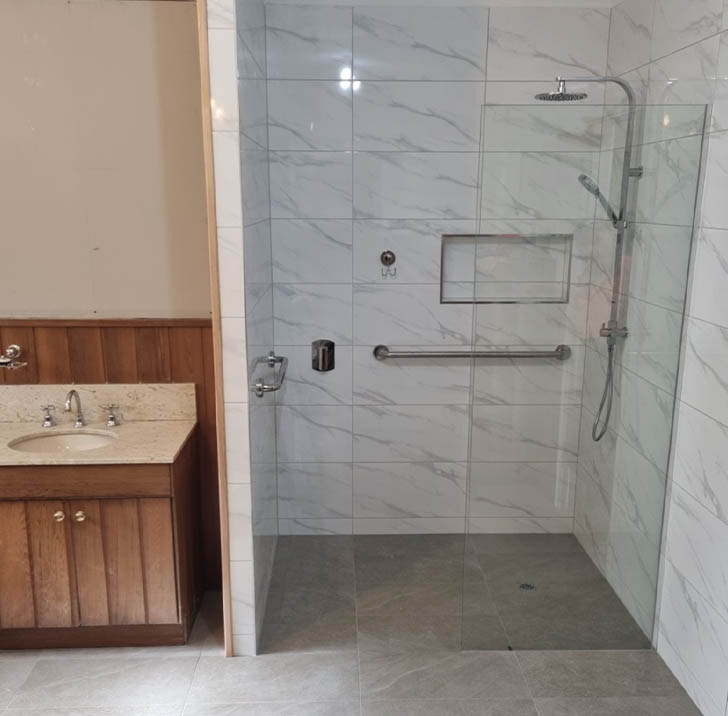
Tile choice is only half the bathroom. The other half is what happens when the tiles go on the wall: how the lines are set out, where the cuts land, how the corners meet and how neat the last bead of silicone is. A safe tile with careful setting-out beats a bold tile laid in a hurry every time.
The best first move is to bring your shortlist to the people who will be laying them before you order anything, so the pattern, the floor falls and the grout are settled together rather than one at a time. If you are weighing up tiles for a bathroom or laundry, it is worth talking them through on a quote visit. You can book one through the Bathroom King contact form or over the phone.
Frequently asked questions
Mid-format tiles such as 300x600 or 400x400 usually work best. Large format looks modern but is harder to set the floor falls, and small mosaics handle the falls easily but add more grout lines to keep clean.
Aim for around P4 under AS 4586, which is roughly R11 on imported tile boxes, because a shower floor is wet and used barefoot. A general bathroom floor can sit a step lower, at about P3 or R10.
Not bad, but it shows grime fastest, especially on floors. Mid-grey grout or a colour matched to the tile ages more cleanly. If you want white, epoxy grout holds its colour far better than cement.
A rough guide is around 10% over the measured area for a straight lay, closer to 15% for diagonal or herringbone, and up to 20% for complex cuts. Keep the leftovers from the same batch for future repairs.
Feature mosaic strips, very high-contrast schemes and hexagon feature floors tend to date within about five to ten years. Simpler, larger-format tiles in calm colours hold up the longest.


