
You’re booking the school holidays around your renovation, and the question is whether you’ll be back in your own bathroom before Term 4 starts. Or you’re picturing dust sheets and tradies through your hallway, and you want to know how long this will all take.
The straight answer: most south-east Melbourne bathroom renovations take 3 to 5 weeks from strip-out to handover. A simple swap-out can come in under 3 weeks. A larger or structurally tricky job can push past 5.
Bathroom King has been renovating bathrooms across the south-east since 1985. We coordinate licensed plumbers, registered waterproofers, and experienced tilers to a single build schedule. We’ve also seen what makes a renovation finish on time and what makes it drag. Here’s the realistic timeline, the stages inside it, and what can shift the dates.
The straight answer: most south-east Melbourne bathroom renovations take 3 to 5 weeks from strip-out to handover. A simple swap-out can come in under 3 weeks. A larger or structurally tricky job can push past 5.
Bathroom King has been renovating bathrooms across the south-east since 1985. We coordinate licensed plumbers, registered waterproofers, and experienced tilers to a single build schedule. We’ve also seen what makes a renovation finish on time and what makes it drag. Here’s the realistic timeline, the stages inside it, and what can shift the dates.
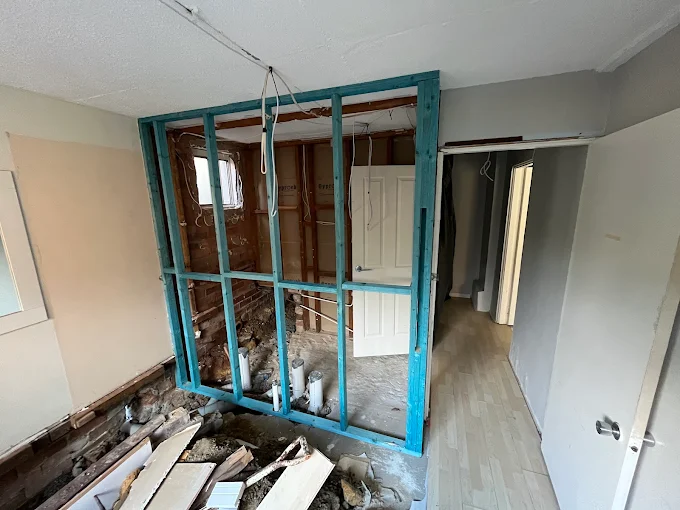
How long does a bathroom renovation take?
A typical Melbourne bathroom renovation runs 3 to 5 weeks from the day demolition begins to the day you walk in on a finished room. That assumes a standard residential bathroom of around 5 to 8 square metres, a full strip-out and refit, fixtures and tiles on-site at the start, and no structural surprises.
What moves the range:
What moves the range:
For a standard mid-sized bathroom with no structural changes, 3 weeks is a fair benchmark. For a larger renovation or one with custom work, plan for 4 to 5.
What are the stages of a bathroom renovation, and how long does each one take?
A bathroom renovation moves through six trade stages, each handled by a different specialist. Most stages run consecutively rather than in parallel, because a single bathroom only fits one trade in the room at a time.
Here’s the typical breakdown for a mid-sized residential bathroom:
Here’s the typical breakdown for a mid-sized residential bathroom:
| Stage | Trade | Typical duration |
|---|---|---|
| Demolition and strip-out | Builder | 1 to 2 days |
| Plumbing rough-in | Licensed plumber | 2 to 3 days |
| Electrical rough-in | Licensed electrician | 1 day |
| Waterproofing | Registered waterproofer | 1 to 2 days, plus 24 to 48 hours cure |
| Tiling | Tiler | 5 to 8 days |
| Fit-off and final clean | Builder, plumber, electrician | 3 to 5 days |
A few stages are worth a closer look:
Michael coordinates the renovation so the work is planned in the right sequence. That includes tile set-out, caulking, plumbing connections, waterproofing and trade timing.
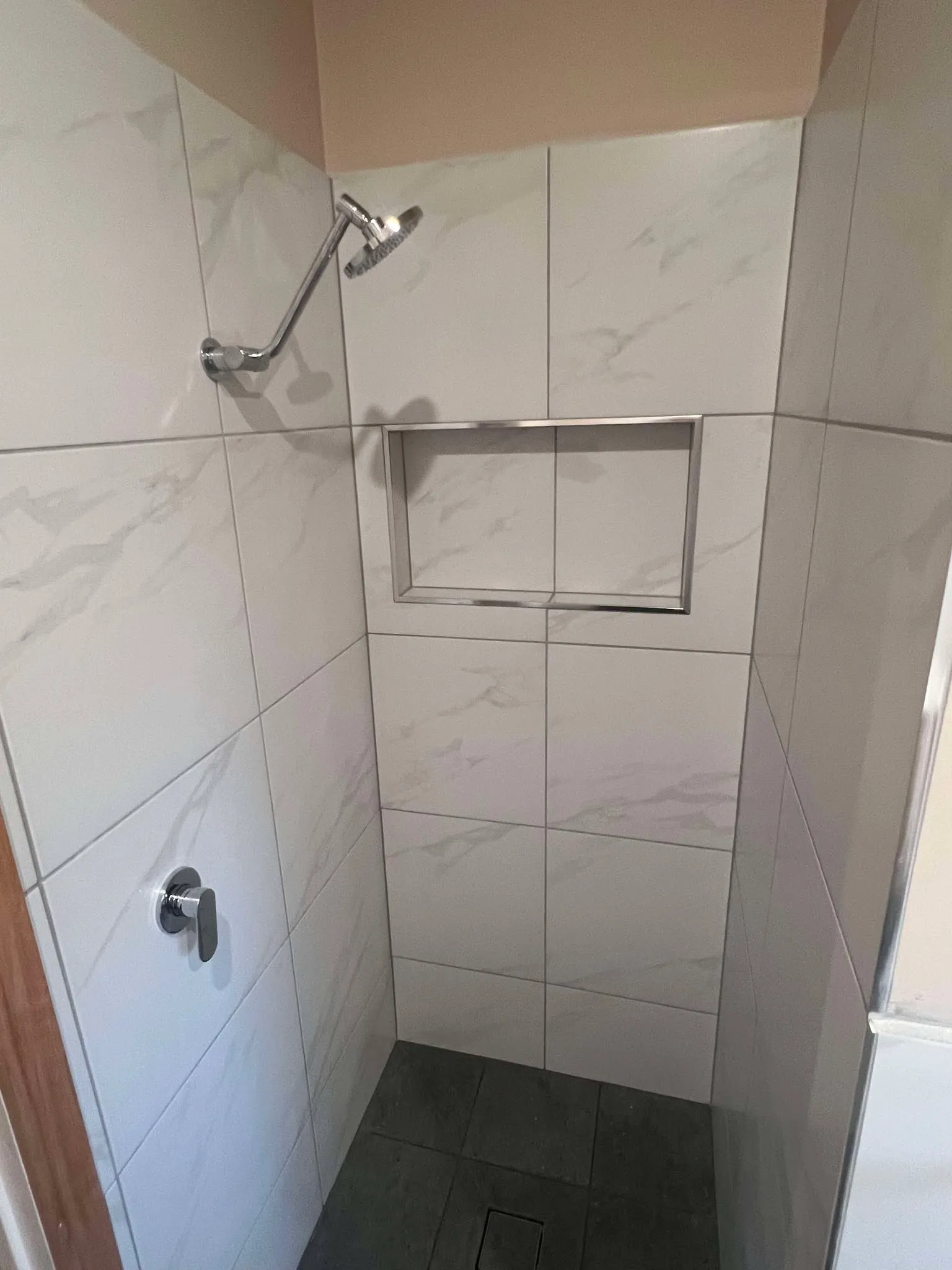
What slows a bathroom renovation down?
The schedule rarely slips because of how fast the trades work. It slips because of decisions that aren’t settled, materials that aren’t on-site, or surprises that show up the moment the walls open.
The common timeline killers:
The common timeline killers:
Tile lead times.
Imported tiles can take 4 to 8 weeks to arrive in Melbourne if they’re not in stock. Specifying tiles late, or specifying tiles that have to be ordered in, is the single most common reason a renovation runs over.
Fixtures arriving late.
Back-ordered vanities, shower screens, and feature tapware can hold up the fit-off even when all the trade work is finished.
Surprises behind the walls.
Older homes through the south-east Melbourne corridor often have outdated plumbing, perished waste lines, hidden stud rot near showers, and asbestos sheeting in some 1960s to 90s stock that needs licensed removal. After four decades of strip-outs across the south-east, the surprises behind the walls are rarely surprising any more. They still need time to deal with properly.
Council approvals.
If the renovation moves load-bearing walls, alters drainage paths outside the building, or affects external walls, you may need a building permit. The approval window varies by council.
Weather delays.
Cold, wet, or humid weather extends waterproofing cure times. Winter renovations in Melbourne can lose a day or two waiting for the membrane to be tile-ready.
Late decision-making.
Choosing the vanity colour mid-project, swapping tapware after rough-in, or changing tile layout once tiling has started all create rework. Decisions made before strip-out save days later on.
Most of these are avoidable with good planning. The few that aren’t are why a fair builder gives you a range, not a single date.
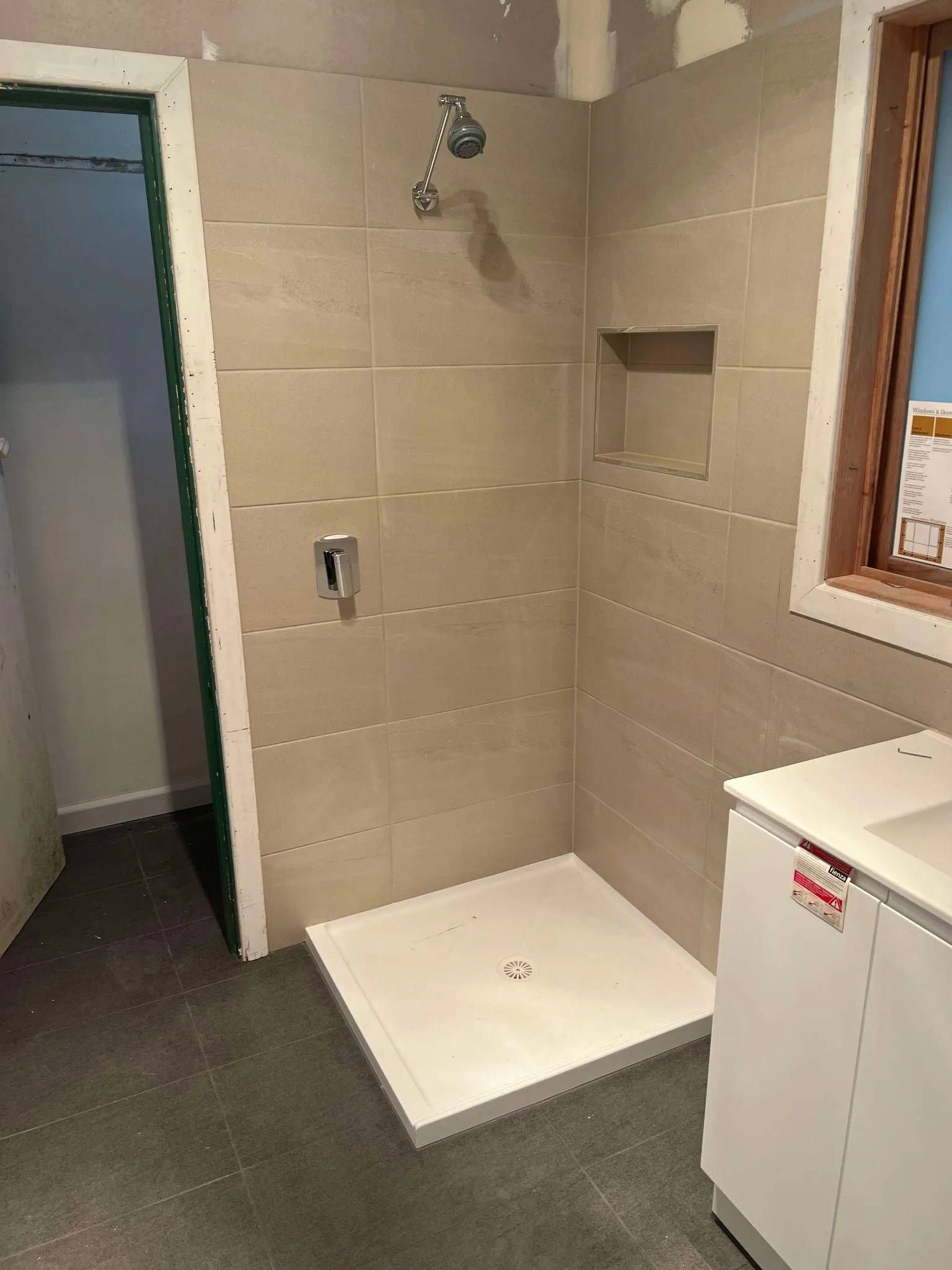
Do I need to move out during a bathroom renovation?
It depends on whether the renovation is on your only bathroom.
If you have a second bathroom or ensuite, most clients stay in the home. There’s dust, noise, and trades through the house from around 7 in the morning, but you can keep your routine. We seal off the work area, lay drop sheets along the access path, and clean down at the end of each day.
If you’re renovating the only bathroom in the house, you’ll need a plan. The common arrangements:
If you have a second bathroom or ensuite, most clients stay in the home. There’s dust, noise, and trades through the house from around 7 in the morning, but you can keep your routine. We seal off the work area, lay drop sheets along the access path, and clean down at the end of each day.
If you’re renovating the only bathroom in the house, you’ll need a plan. The common arrangements:
In practice, the toilet and one cold tap can sometimes be left functional through parts of the build, but the shower will be out for at least 10 to 14 days. We talk through the access plan on the quote visit so you can make the call that suits your household.
Can a bathroom renovation be done faster?
Yes, in some cases. A renovation can be compressed if every variable that adds time is locked down before strip-out begins.
What compresses cleanly:
What doesn’t compress, no matter how much you push:
A renovation that takes the full 4 weeks but is right when you walk in beats one that finishes in 2 and gives you trouble for the next decade.
What keeps a bathroom renovation finishing on schedule?
The renovations that finish on time share a small set of things in common. None of them are about working faster.
Every decision settled before strip-out.
Tiles, tapware, vanity, mirror, lighting, exhaust fan, towel rails. All picked, all confirmed, all in writing.
Materials on-site before demolition.
Tiles, fixtures, and accessories ordered early enough that they’re sitting at the site when the strip-out begins.
One trade in the room at a time, in the right order.
Stacking trades doesn’t speed a bathroom up. It creates rework, damaged finishes, and arguments about who scratched what. A coordinated trade sequence is what makes the timeline real.
A reliable trade network.
The plumbing, waterproofing, and tiling all hinge on people who turn up on the day they said they would. We work with the same licensed plumbers, registered waterproofers, and tilers across most jobs, which is why our schedules hold.
Clear communication about open decisions.
If something is still being chosen when the job starts, both sides know about it, and the trade sequence is built around it.
If you’re starting to plan a bathroom renovation in Melbourne’s south-east, we’d be glad to walk through your project timeline on a quote visit. Get in touch via the contact form or give us a call.
Frequently asked questions about renovating a bathroom
Not for most of the build. The room is unusable from the day of strip-out through to the end of tiling, which is typically 2 to 3 weeks. The toilet and a cold tap can sometimes be left running for short stretches early in the job, but the shower is out for at least 10 to 14 days while waterproofing and tiling are completed.
Application takes 1 to 2 days, depending on the size of the room and the number of coats. The membrane then needs to cure before tiling begins. Cure time is typically 24 to 48 hours but varies with the product used, the temperature, and the humidity. In Melbourne winter, cure times sit at the upper end of that range.
Most cosmetic renovations don’t need a building permit. Approval is more likely if the project moves load-bearing walls, alters the external footprint of the building, changes drainage paths outside the building, or involves a unit in a strata setting. A building surveyor can confirm what’s required before you start. Plumbing work still needs to be carried out by a licensed plumber under VBA rules, permit or not.
Tiling, in most cases. A standard bathroom of around 5 to 8 square metres takes 5 to 8 days to tile, longer with large format tiles, mosaics, or complex patterns. Waterproofing is shorter as an active stage but adds 24 to 48 hours of cure time on top before tiling can start.
Slightly. Cold and wet weather extends waterproofing cure times by a day or two in most Melbourne winters. It doesn’t change the build sequence or the trade work, only the wait between the stages.


