
Engineered stone benchtops, panels and slabs cannot be supplied or installed anywhere in Victoria. Porcelain and sintered stone that contain no resin can be. So can natural stone such as granite, along with timber and laminate. An engineered stone top already in your kitchen or bathroom can stay where it is.
If a showroom has told you the engineered stone ban rules out the top you liked, here is what you can have instead.
What does Victoria’s engineered stone ban cover?
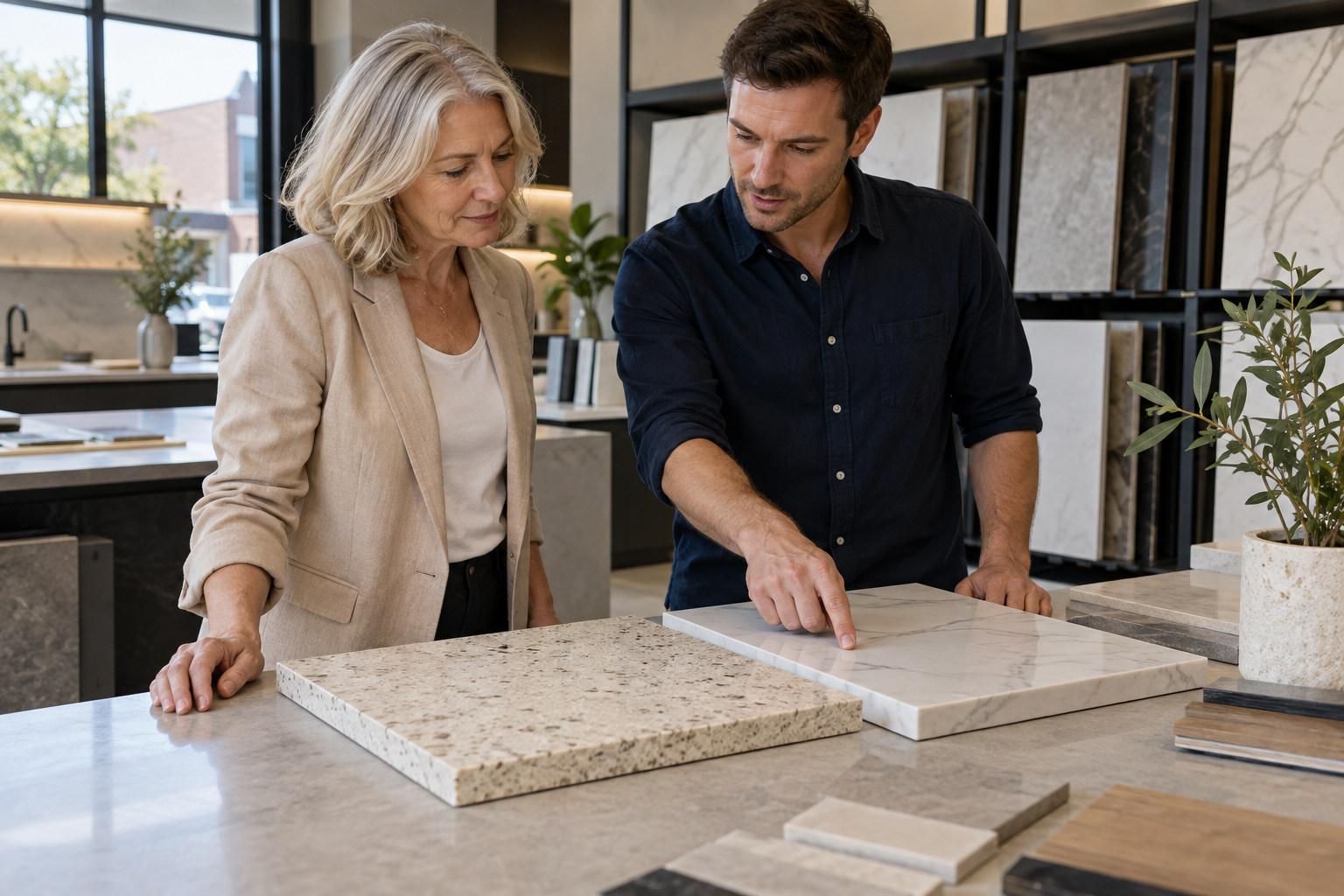
WorkSafe Victoria puts it in one line. From 1 July 2024, the manufacture, supply, processing or installation of engineered stone benchtops, panels or slabs is banned in Victoria.
Three forms are named. Benchtops, such as those installed in kitchens and bathrooms and outdoor surfaces. Panels, such as kitchen splashbacks or floor and wall tiles. Slabs, which might need cutting to fit the setting.
The definition does the work here. WorkSafe Victoria describes engineered stone as an artificial product that contains one per cent or more crystalline silica by weight. It is made by combining natural stone materials with other things such as water, resins or pigments. It then sets hard. Crystalline silica is the mineral in stone that becomes fine dust when the stone is cut. The ban is there to protect workers from silicosis, the lung disease that dust causes.
Products that are not benchtops, panels or slabs sit outside the ban. WorkSafe Victoria names jewellery, garden ornaments, sculptures and kitchen sinks.
Victoria set no transitional period. WorkSafe Victoria says an owner and builder must not arrange to have engineered stone installed. An existing contract has to be varied so an alternative product goes in.
Which kitchen benchtop materials can still be installed in Victoria?
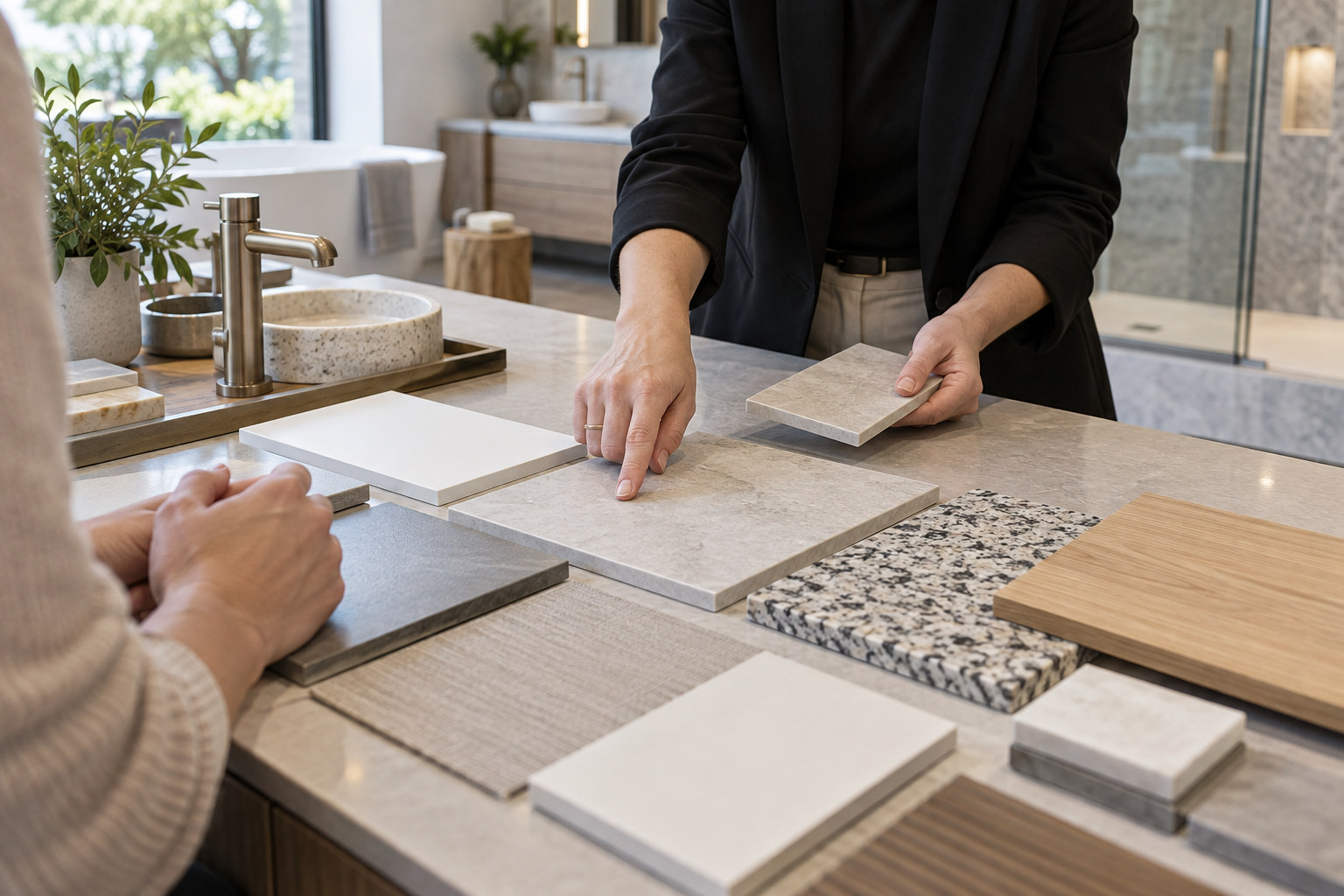
Most of them. WorkSafe Victoria publishes a list of products the ban does not apply to. It names concrete and cement products, bricks, pavers and other similar blocks, and ceramic wall and floor tiles. It also names sintered stone and porcelain products that do not contain resin, roof tiles, grout, mortar or render, and plasterboard. Benchtops, panels and slabs are named inside that porcelain and sintered stone entry, so a benchtop in those materials is excluded too.
Natural stone is outside the ban as well. WorkSafe Victoria says so in terms: a granite benchtop is not prohibited.
Sintered stone is made by pressing mineral powders together and firing them until they fuse. Porcelain is fired in much the same way. The phrase that matters for both is ‘that do not contain resin’. A product with resin in it is not automatically outside the ban.
Timber and laminate are not stone products, so the definition does not reach them. Solid surface is a man-made sheet of mineral powder held together with resin. Its safety data sheet matters more than its label.
Ceramic wall and floor tiles are on that exclusion list. The ban changes nothing about how you choose bathroom tiles. Engineered stone is the exception, because a splashback or wall tile made from it is a panel.
How do you tell whether a benchtop is engineered stone?
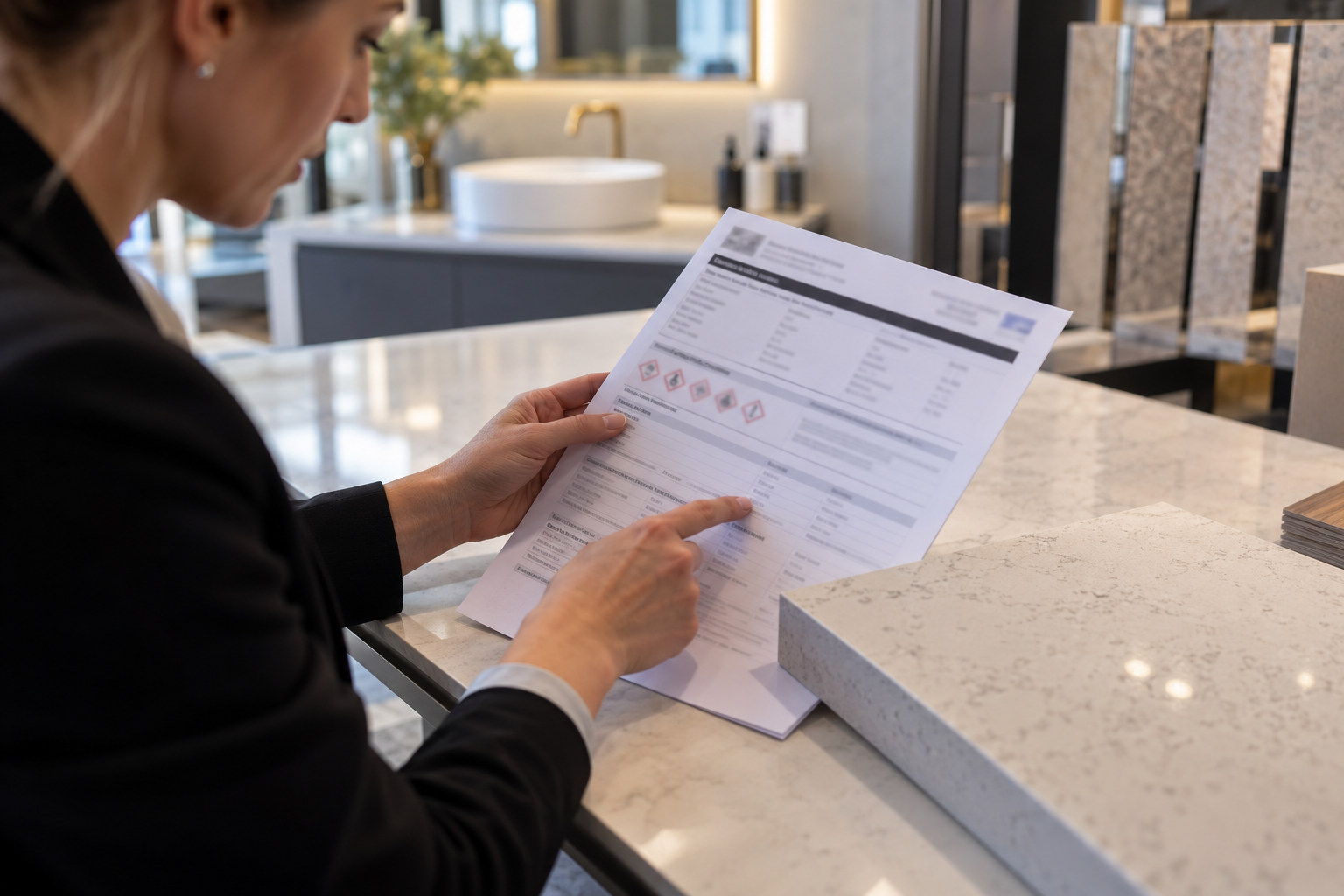
WorkSafe Victoria puts that on the buyer. It says working out whether a product meets the definition of engineered stone is your responsibility. It points you at the product safety data sheet, or at the manufacturer, for what a product contains. An accredited laboratory can test a sample where that is still unclear.
A safety data sheet is a document the maker publishes listing what is in a product. Ask the supplier to email you the sheet for the slab you are being quoted on. Two things on it settle the question. The crystalline silica content, and whether a resin is listed.
The name on a showroom display does not settle it. A slab sold as porcelain or sintered still has a safety data sheet, and that is what the trade cutting it works from.
What does the ban mean for a bathroom vanity top?
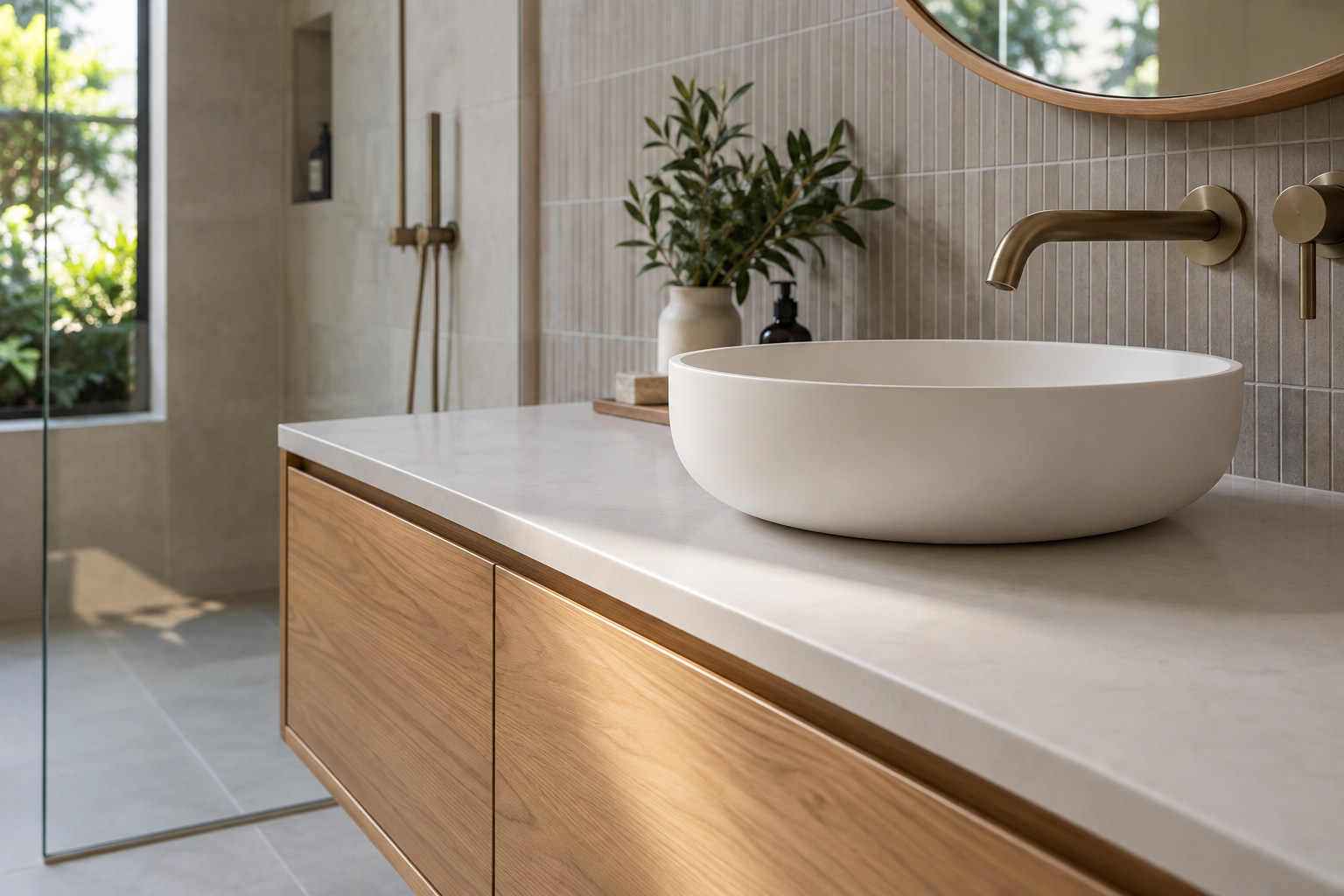
The same rule applies. WorkSafe Victoria describes the banned benchtops as those installed in kitchens and bathrooms and outdoor surfaces. A vanity top is a benchtop for this purpose. An engineered stone one cannot go in now.
The size of the piece makes no difference. The exclusion list turns on what a product is, not on how much of it you buy. A small top cut for one basin is treated like a whole kitchen run.
Porcelain and sintered stone without resin suit a vanity, and natural stone is still available. A timber top works where the basin sits above it.
The cabinet underneath is a separate decision from the top that sits on it. The same materials rule applies whether the cabinet is custom-built or off the shelf.
Do you have to remove an engineered stone benchtop you already have?
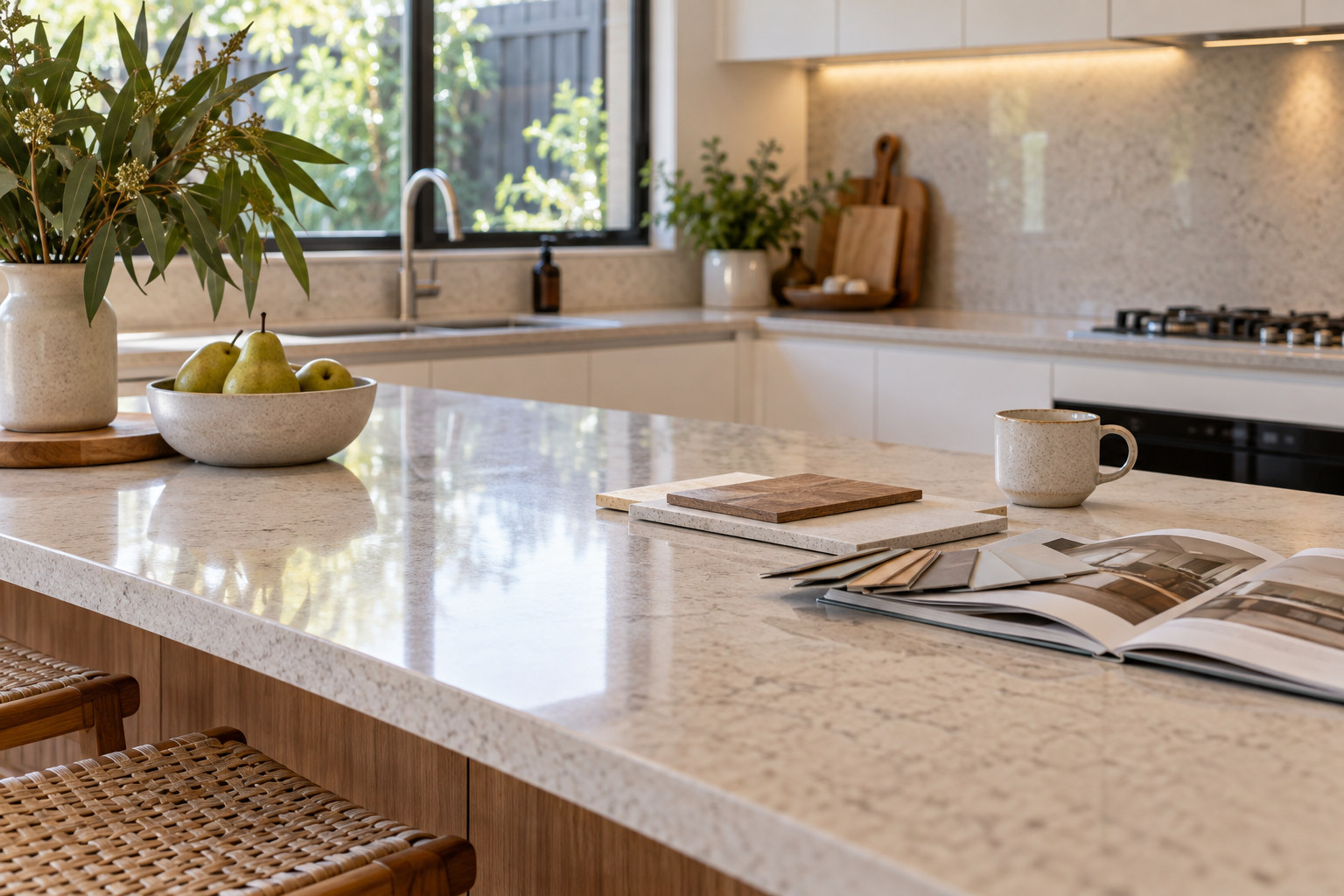
No. WorkSafe Victoria calls stone installed before 1 July 2024 legacy stone. Repairs, modifications, removal and disposal of legacy stone benchtops, panels or slabs are all permitted. WorkSafe Victoria also says you do not need a licence to work with legacy stone. That is the part most homeowners have backwards.
Leaving it alone and taking it out are different jobs, though. Where the work involves cutting, grinding or abrasive polishing, WorkSafe Victoria treats it as high risk crystalline silica work. A hazard control statement is required. So are dust controls such as on-tool water delivery or on-tool dust extraction.
In kitchens through the Knox and Monash corridor fitted out between the late 1990s and the early 2020s, the benchtop is almost always engineered stone. It is the top most often coming out now. That removal belongs to a trade with those controls, not to a Saturday with an angle grinder.
How do the remaining benchtop materials compare?
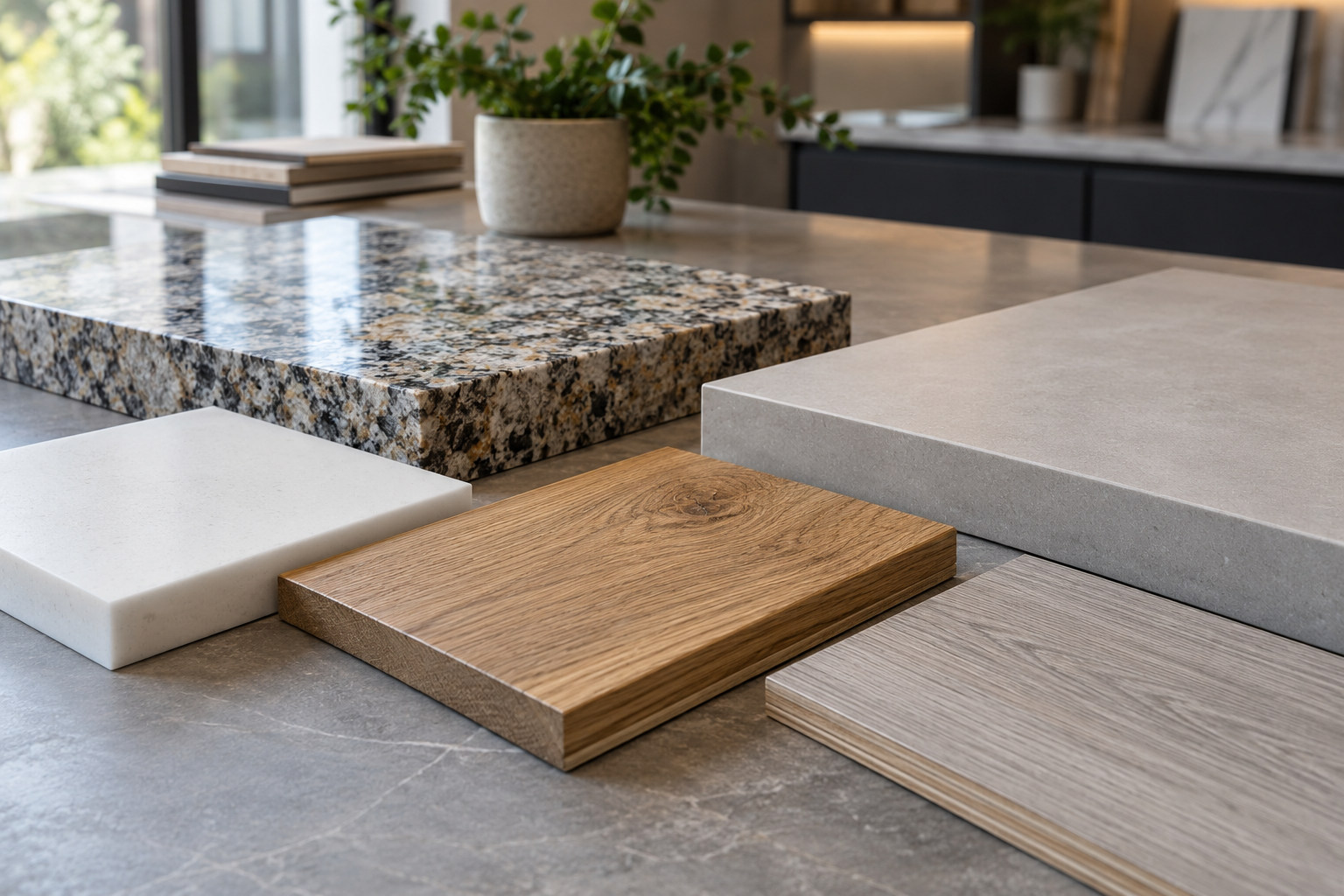
Start from how the room gets used, because every material gives something up.
On cost, laminate is the cheapest of these and natural stone and thick porcelain the dearest. Timber and solid surface sit in between.
| Material | What to expect living with it | How damage is dealt with |
|---|---|---|
| Porcelain or sintered stone without resin | A hard surface and a thin slab, with a visible join on a long run | A chipped edge is trade work, and a printed surface shows a different colour underneath |
| Natural stone such as granite or marble | Every slab is different, and marble marks from wine, citrus and the wrong cleaner | Sealing is part of owning it, and polishing back is trade work |
| Solid surface | Joins can be made almost invisible, and it feels warmer under the hand | A trade can sand out scratches and burns |
| Timber | It moves with the seasons, and the sink and dishwasher edges are where it gives up | You can sand and re-oil it yourself |
| Laminate | The widest range of looks for the money, stone prints included | A damaged edge cannot be made invisible again |
Dark matt finishes are worth thinking twice about. They photograph beautifully and show every fingerprint. That is the complaint that turns up about six months after the job.
Ask where the join will fall before you settle on a material. The size of the slab decides that, not the kitchen.
What to settle before you choose a benchtop

Three things are worth settling before you pick a material, and none of them is about looks.
The first is who cuts and installs the top. That trade, not the renovator, works to the silica rules. The second is whether the quote includes taking the old top out and getting rid of it. That is separate work with its own dust controls. The third is the safety data sheet, easier to ask for before a deposit is paid than after.
Then look at your own week. A household that cooks with hot pans and wipes the bench down daily wants a different top from one that mainly has to look good.
Bathroom King works across south-east Melbourne from Ferny Creek. A benchtop sits inside the bigger job of kitchen renovations, or of vanity and cabinet work in a bathroom. Bring three things. A photo of the room, the measurement of the run you want replaced, and the safety data sheet for anything a showroom has shown you.
Frequently asked questions about benchtops and the engineered stone ban
Can I still get a stone benchtop in Victoria?
Yes, as long as it is quarried rather than manufactured. Granite is the example the regulator itself uses, and other quarried stone sits in the same place.
Is porcelain the same as engineered stone?
No, provided there is no resin in it. Porcelain is fired rather than bound with resin, and the resin-free version is on the regulator’s exclusion list.
Do I have to rip out the engineered stone benchtop I already have?
No. A top installed before July 2024 can stay, and living with it is not work, so none of the dust rules reach it. They start when somebody cuts or grinds the surface.
What happens to a contract I signed before the ban?
It has to change, because Victoria ran no transition and an agreement naming engineered stone is varied to an alternative product.
Is a vanity top covered by the ban?
Yes. The regulator’s wording reaches bathrooms as well as kitchens, so an engineered stone vanity top cannot go in, whatever its size.


