
A bathroom renovation needs a new exhaust fan if the old one vents into the roof space, or if the mirror stays fogged long after a shower. Replace it while the ceiling and wiring are open. Where the fan sends the air matters as much as how strong it is, because air pushed into the roof space takes its moisture with it instead of getting it out of the house.
For example, picture a renovated bathroom with new tiles and a new vanity, where the mirror still fogs for half an hour after every shower. The finishes changed, but the way steam leaves the room did not.
Why the old fan is worth checking before the ceiling closes
In a full renovation, the ceiling and the wiring can usually be reached. That makes it the easiest point in the job to replace a fan, move it or run a new duct. A duct is the pipe that carries air from the fan to the outside.
Once the ceiling is sheeted and painted, the same change means cutting into a finished room. A tired fan left in place can also let down the new work. A small room with poor extraction can feel damp even when the finishes are new, a point we make in our guide to small bathroom layouts for tight spaces.
That matters in the Dandenong Ranges foothills and across Melbourne’s south-east, where cold, damp winters give steam plenty of cold surfaces to settle on.
To find out where the old fan sends its air, ask your electrician or builder to check from the roof space. A duct that runs from the fan to a vent opening to the outside takes the air out of the house. A fan with no duct, or a duct that stops short inside the roof space, is pushing warm, wet air into the roof instead.
Is it condensation or a leak?
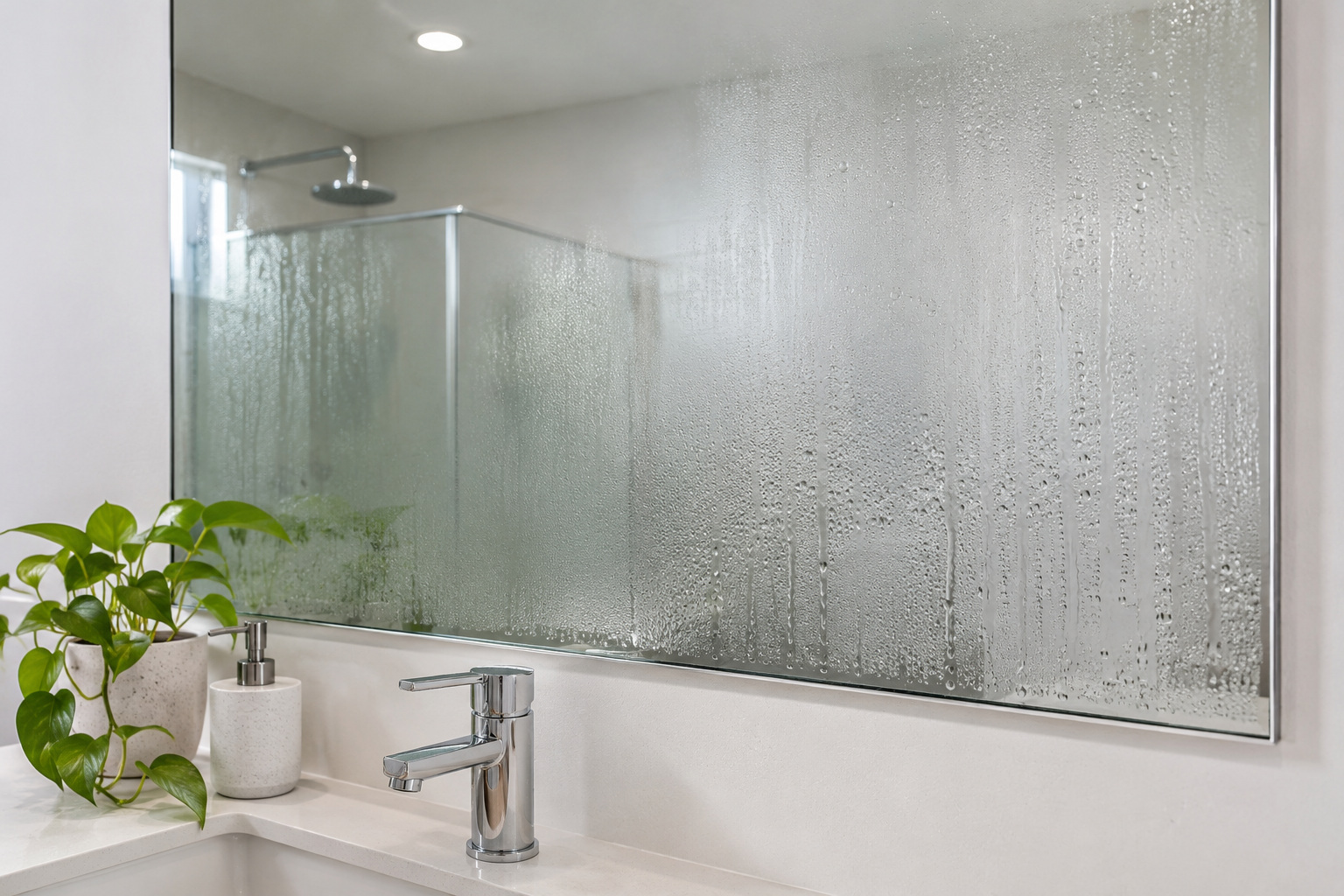
Condensation is water from the air turning back into droplets on a cold surface. A leak is water getting somewhere it should not. A fan helps with the first and does nothing for the second, so work out which one you have before choosing a fix:
If the signs point to a leak, a new fan will not fix it. Our guide on what to check before the tiles go on explains how waterproofing protects the room and where it can fail.
- Signs of condensation: droplets on a cold ceiling, mirror or window after showers, often worst in winter and clearing as the room dries out.
- Signs of a leak: damp that stays whether or not anyone has showered, or marks on the walls or floor beside the shower or bath, which point to water getting past the tiles.
Room size, duct run and where the air goes
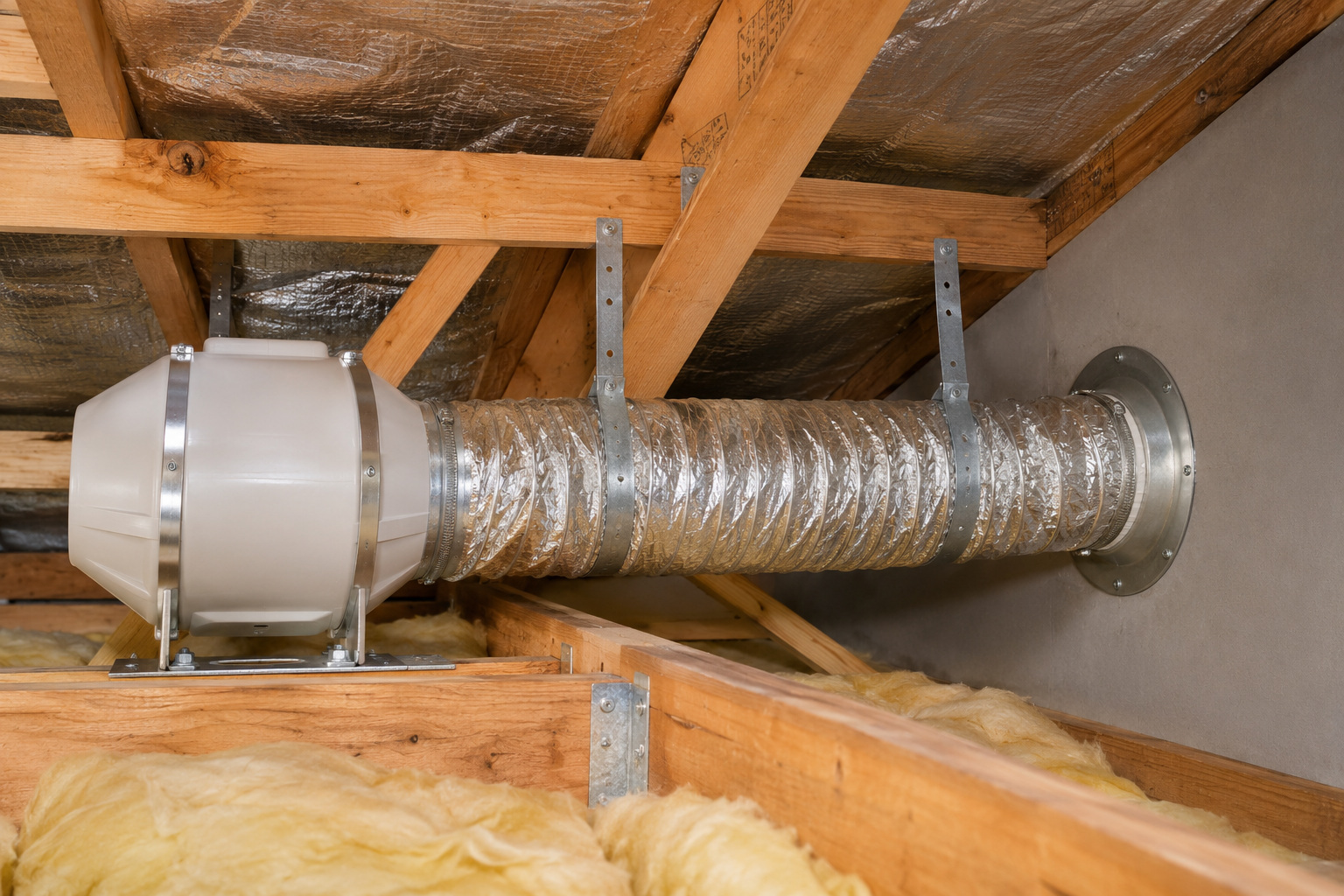
A fan clears a room when it can move enough air, through its duct, to somewhere outside the house. Three things decide how well it does that:
Moisture left in the roof space has to go somewhere. On a cold night it can settle on the underside of the roof, well away from where anyone would notice it.
- Room size. A bigger room holds more steamy air, so the fan has more to shift each time.
- The duct run. Length and bends make the fan work harder, so a long, kinked duct moves less air than a short, straight one.
- The discharge point. Discharge is where the air leaves the duct. A fan that discharges outside removes the moisture. A fan that discharges into the ceiling space only moves the problem somewhere you cannot see.
The National Construction Code sets ventilation requirements for bathroom exhaust systems, including minimum flow rates. Your electrician and builder size and duct the new fan to meet the current requirements, so the number on the fan’s box is only part of the answer.
Where the fan should sit

A fan works best when it pulls air across the whole room. Put it over or near the shower, where the steam is made, and away from the door.
Fresh air then comes in at the door, crosses the room and leaves through the fan, taking the steam with it. A fan right beside the door tends to draw in that fresh air and leave the steam behind.
The exact spot also depends on the ceiling framing and the duct route, which the electrician and builder work out on site.
An open window does not replace the fan
An openable window lets steam out while it is open. On a cold winter night the window is usually shut, and that is when the fan has to do the work.
A bathroom with no openable window needs one more thing. When a fan pulls air out, replacement air has to come in from somewhere, and this is called make-up air. The housing provisions of the National Construction Code require make-up air for some rooms that have an exhaust fan and no natural ventilation, such as a bathroom without an openable window. The code’s explanatory notes give a gap under the door as one way to provide it.
That is worth knowing before a new door goes in, because a door hung tight to the floor can starve the fan of air.
Who fits the fan and when it is planned
Fitting and wiring a bathroom exhaust fan is electrical work for a licensed electrician, even when the old fan looks like a simple swap.
The fan is best planned with the lighting, before the ceiling closes. That is also when the duct route is settled: where it runs through the roof space and where it comes out.
Some fans are wired to come on with the light and keep running for a set time after it is switched off, using a run-on timer. Raise it when the lighting is planned, because the wiring is easiest to change then.
Planning ventilation with the rest of the room
The fan, the lighting and the fixtures all compete for the same ceiling and wall space, so they are easiest to get right when they are drawn up together. Bathroom King, based in Ferny Creek, coordinates the fixtures, lighting and ventilation with the right trades on renovations across Melbourne’s south-east. You can read more about how we approach bathroom renovations across Melbourne, including the trades involved.


